If your turkey fryer basket just snapped a handle or your hook went missing the night before Thanksgiving, you already know the particular panic that comes with it. A lifting system — the combination of a perforated metal rack that cradles the bird, a hook rod that lets you lower and raise the rack while keeping your hands far from 350°F oil, and sometimes a vertical roasting stand that holds the turkey cavity-down for even cooking and clean drainage — is the one piece of gear that separates a controlled fry from a dangerous splash. This article maps the three main approaches against each other, names the tradeoffs honestly, and closes with clear decision rules so you can settle on the right system before the oil comes up to temp.
The Three Lifting Methods, Side by Side
Turkey fryer lifting systems fall into three distinct categories, each with its own mechanical logic, pot-size requirements, and storage footprint. Understanding how each works before you buy saves you a scramble the morning of the fry.
1. Rack-and-Hook Kit
King
$19.99
In stock on Amazon
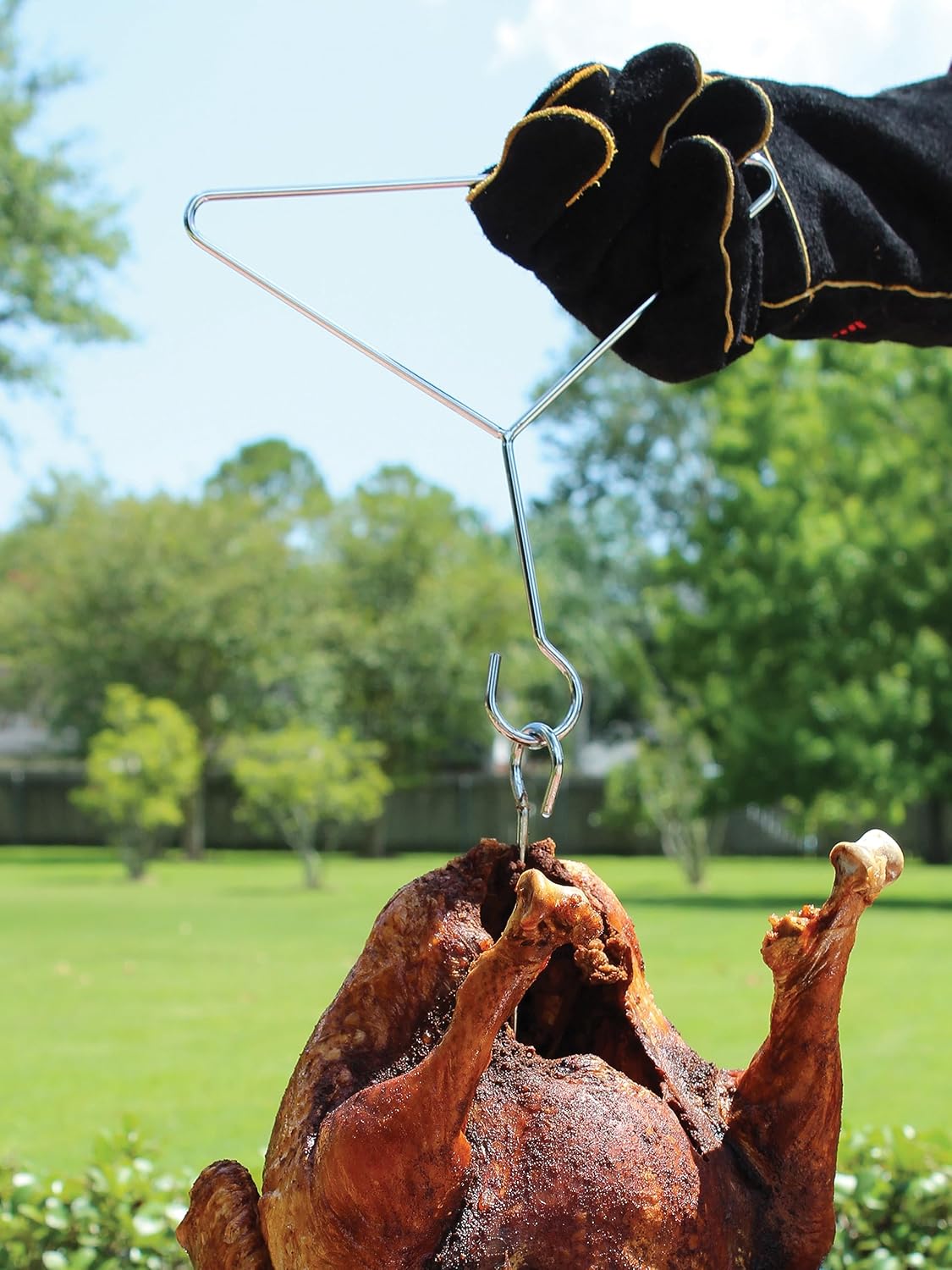
Check price on AmazonThe rack-and-hook kit is the default system that ships with most entry- and mid-range turkey fryer packages: a perforated stainless or chrome-plated steel rack sized to cradle a whole bird, paired with a hook rod long enough to reach the bottom of a 30–32-quart pot without your hand approaching the oil line.
The King Kooker rack-and-hook accessory kit is the reference product in this category. Owner review patterns on the King Kooker Turkey Fryer Accessory Kit listing reveal a telling usage trend: a meaningful share of buyers are replacing a lost or damaged set rather than purchasing for the first time. One reviewer ordered specifically because they misplaced the kit before Thanksgiving. That anecdote carries two lessons. First, this system works well enough that users come back to it. Second, because turkey frying is a once-or-twice-a-year event, the kit spends most of its life in a drawer or on a garage shelf, where individual pieces separate.
One detail careful reviewers single out: the King Kooker kit uses a threaded-rod hook connection rather than a welded joint. That sounds like a downgrade on paper, but experienced fryers flag it as a positive — if the hook bends or the thread strips after a few seasons, you replace the hook alone, not the whole kit. Replaceability of components matters when the rack itself is still serviceable.
Collapsible, flat-storage design is consistently praised as a practical feature across this category. A rack that folds flat stores in the same cabinet as the pot lid. That is not a marketing detail — it is the reason owners retain it from one year to the next.
Best for: One or two turkey fries per year, standard 30–32-quart pots, owners who prioritize the simplest possible setup and maximum storage convenience.
King
$19.99
In stock on Amazon
Check price on Amazon2. Vertical Roasting Stand
CHARD
$29.66
In stock on Amazon
Check price on AmazonA vertical roasting stand is an upright spike-and-ring mandrel assembly — the turkey sits cavity-down over it, held vertically rather than lying flat on a rack. Proponents of this approach argue that the cavity-down orientation allows oil to circulate more evenly through the bird’s interior and drain more completely on extraction.
What published food-science sources tell us: Serious Eats, in their deep-fry turkey guide (Serious Eats, “How to Deep-Fry a Turkey Safely”), notes that even oil temperature distribution is the primary driver of cook quality, and that cavity orientation affects how quickly the interior reaches a safe temperature. A vertical stand positions the thickest part of the breast lower in the pot, closer to the heat source, which can reduce the temperature differential between breast and thigh. The rack-and-hook method, with the bird lying at an angle or flat, puts more surface area in contact with circulating oil but may extend the time required for the interior cavity to reach temperature — a point that Cook’s Illustrated whole-bird deep-fry technique testing also surfaces when discussing thermal evenness in large birds.
The pot-depth constraint is real. A 15-pound turkey on a vertical stand needs sufficient interior depth to submerge fully without drumstick tips clearing the oil surface. Food and Wine’s turkey frying safety guide (Food and Wine, “Turkey Frying Safety Guide”) recommends a minimum 30-quart pot for birds up to 15 pounds on a flat rack; a vertical stand adds effective bird height, meaning some setups require a 34-quart or deeper vessel to clear the rim safely. Measure your pot’s interior depth before committing to a vertical stand.
Vertical stands also solve a small-bird problem. For chickens and ducks — typically 3–5 pounds — a flat rack offers little lateral stability, and oil buoyancy can cause a light bird to float and tip. A vertical stand locks the bird in place and buoyancy works in your favor by reducing effective downward weight on the spike. If you fry multiple species across the season, a vertical stand delivers meaningfully cleaner results with smaller birds.
Best for: Fryers who prioritize thermal evenness, fry smaller birds alongside turkeys, and own or are willing to purchase a 34-quart or deeper pot.
CHARD
$29.66
In stock on Amazon
Check price on Amazon3. Basket-as-Lifting-System
Bayou
$88.88
In stock on Amazon
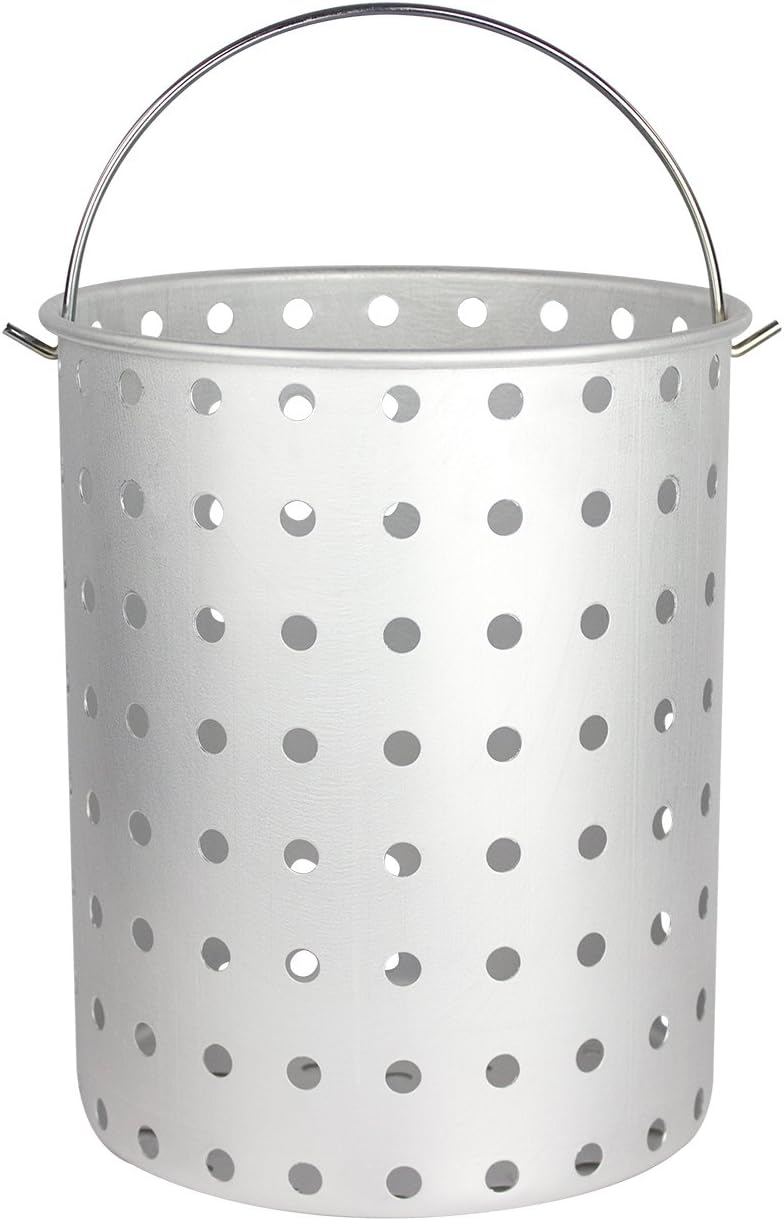
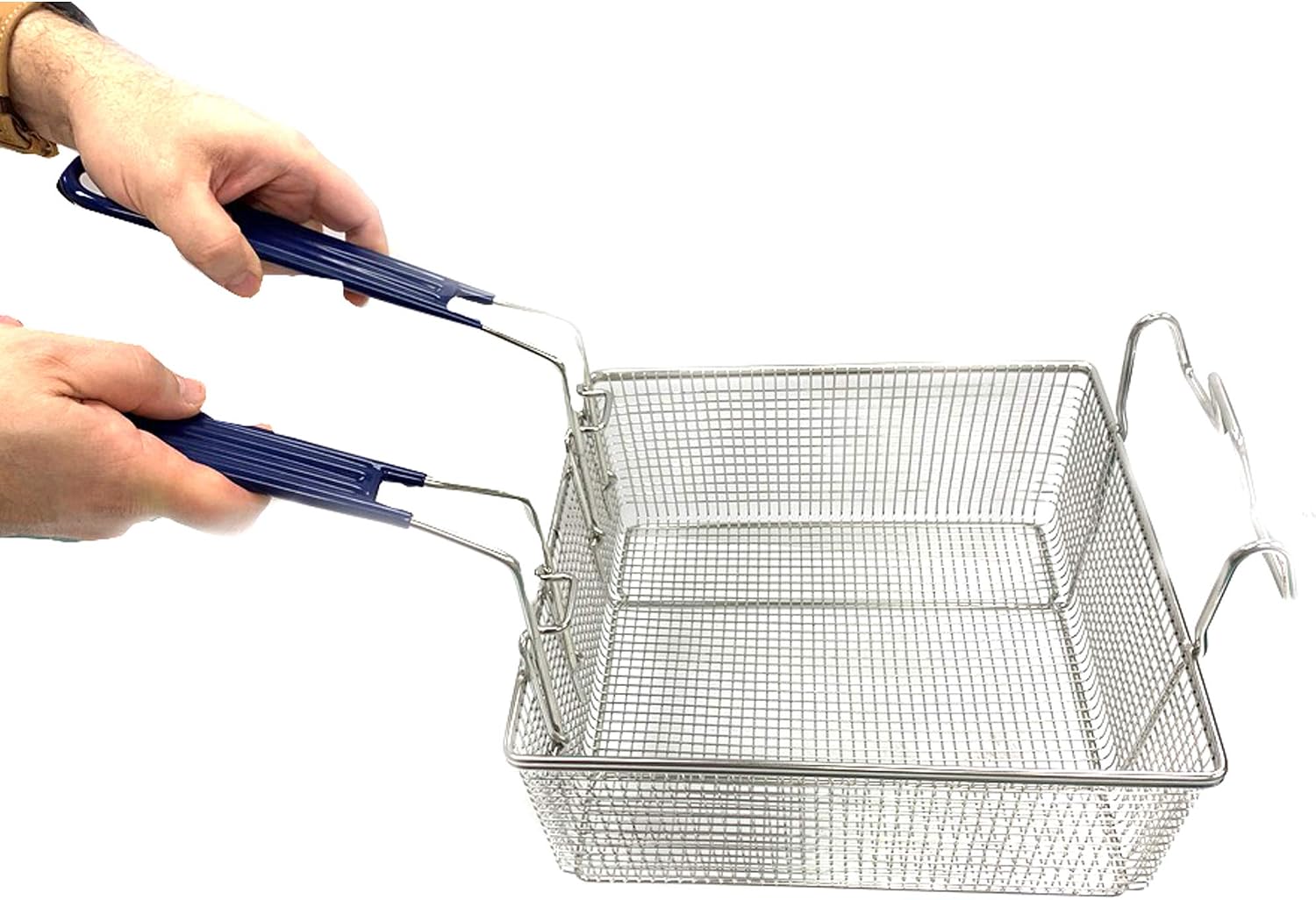
Check price on AmazonThe basket-as-lift approach uses a large-diameter perforated basket — such as the CHARD 30-Quart Turkey Fryer Basket — as both the cooking vessel and the lowering mechanism, treating it the way you would use a rack-and-hook setup. The appeal is consolidation: one piece of gear handles the whole bird and then transitions directly to smaller items like shrimp, vegetables, and wings without a changeover.
The tradeoff is mesh restriction. A basket with fine or medium mesh restricts oil flow around the bird more than a perforated flat rack, which can create minor temperature recovery delays and uneven browning at high-density contact points. For a single bird at a backyard fry, this is not a reported problem in practice. For back-to-back sessions — turkey first, then shrimp and vegetables — the basket approach becomes the operationally superior choice, because the fryer never leaves basket mode.
From a safety mechanics perspective, the basket handle provides slightly less fine-grain vertical control than a hook rod during initial submersion. Food and Wine’s turkey frying safety guide (Food and Wine, “Turkey Frying Safety Guide”) and Serious Eats’ deep-fry turkey guide (Serious Eats, “How to Deep-Fry a Turkey Safely”) both emphasize that the dangerous moment in turkey frying is not the fry itself but the initial submersion — when moisture on the skin flash-vaporizes and the oil level rises rapidly. A long hook rod allows you to lower at a controlled 1–2 inches per second and pause mid-descent at the rim if oil begins to surge. A basket handle, depending on design, may offer less pause-and-resume control because the geometry requires a more committed lowering arc. Users who adopt the basket-as-lift approach should lower with particular deliberateness on the first few inches of submersion.
Best for: Multi-item outdoor fry sessions, owners who already have a large basket and prefer minimal gear, and fryers who prioritize workflow continuity over maximum submersion control.
Bayou
$88.88
In stock on Amazon
Check price on AmazonBy the Numbers
| Method | Minimum Pot Size (15-lb bird) | Separate Hook Needed? | Multi-Item Session Friendly? | Storage Complexity |
|---|---|---|---|---|
| Rack + hook kit | 30 qt | Yes — included in kit | Low: rack is single-purpose per session | Low if collapsible |
| Vertical roasting stand | 34 qt (depth-dependent) | Yes, or long tongs | Low | Medium: stand is rigid |
| Basket-as-lift | 30 qt | Hook integrated on basket handle | High: basket transitions to small items | Low: basket already stored |
Fit Compatibility: Will a King Kooker Kit Work in a Bayou Classic or CHARD Pot?
This is the question that trips up buyers who own a fryer from one brand and are ordering replacement accessories from another. The short answer: rack-and-hook kits are more cross-compatible than fryer burner assemblies, because the rack only needs to fit inside the pot’s interior diameter and the hook only needs to clear the rim depth. Neither component needs to mate with any manufacturer-specific bracket or mount.
The King Kooker rack is sized to fit standard 30–32-quart aluminum turkey fryer pots, which is the dominant interior diameter across King Kooker, Bayou Classic, and CHARD’s mid-range fryer lines. If your pot’s interior diameter falls within that range, the rack drops in without modification. The hook length is the secondary variable: a hook dimensioned for a 30-quart pot will bottom out before the hook lip clears the rim on a 40-quart vessel.
The CHARD 30-Quart Turkey Fryer Basket specification documentation confirms interior dimensions that align with standard King Kooker rack sizing — another indicator that this form factor has become a de facto industry standard for home turkey fryers.
Decision rule before ordering a replacement: Measure your pot’s interior diameter and depth. Cross-reference against the rack’s published diameter and the hook’s published length. King Kooker and Bayou Classic both publish these figures on their respective product pages. CHARD publishes them in their basket specification documentation. A five-minute measurement before checkout prevents a return shipment.
Safety Mechanics: Why Lowering Speed Is the Critical Variable
NSF International’s NSF/ANSI 8 Standard for Commercial Powered Food Preparation Equipment addresses thermal management in immersion cooking equipment — and the underlying physics it codifies apply directly to home turkey frying. When a cold or room-temperature turkey enters 350°F oil, surface moisture flash-vaporizes instantly, causing the oil level to rise rapidly. The faster the submersion, the larger and faster that surge.
The lifting system is the primary mechanical control you have over lowering speed. A hook-and-rack system gives you a 12–18-inch rod between your hands and the pot rim, which means you can lower at a controlled 1–2 inches per second while watching the oil level without leaning dangerously close to the heat source. The pause-and-resume capability — holding the hook at the rim, waiting for the initial boil to subside, then continuing the descent — is a reliable safety technique that Serious Eats’ deep-fry turkey guide (Serious Eats, “How to Deep-Fry a Turkey Safely”) and Cook’s Illustrated whole-bird deep-fry testing notes both describe as standard practice for experienced fryers.
That pause-and-resume capability is inherently easier with a hook rod than with a basket handle. This is not a reason to avoid the basket-as-lift method, but it is a reason to practice the lowering motion with an unheated pot before your first live fry.
Storage: How Not to Lose Your Kit Before Next Thanksgiving
The King Kooker kit review pattern — buyers who are actually replacing a lost set — is a procurement problem with a simple operational fix. Owners who report retaining their kit intact year over year describe one consistent behavior: storing the hook inside the rack, wrapping both together, and nesting the assembly inside the fryer pot before storing the pot itself.
The pot is the one component you will not misplace — it is too large to disappear into a cabinet. Nesting the rack-and-hook kit inside the pot before long-term storage eliminates the lost-hook problem entirely.
Vertical stands, being rigid and non-collapsible, are harder to nest. Owners who use them typically hang them on a dedicated garage hook or store them vertically alongside the pot — the same approach you would use for an oven roasting rack.
Frequently Asked Questions
Is a rack-and-hook system safer than a basket for lowering a whole turkey? For most home fryers, yes — the long hook rod gives you more mechanical control over lowering speed and lets you pause mid-descent if oil surges. A basket handle offers less fine-grain vertical control. Either method is safe if you lower slowly and keep hands clear of the pot rim.
Will a King Kooker rack and hook kit fit fryer pots from Bayou Classic or CHARD? Generally yes, for standard 30–32-quart pots. The rack is dimensioned to the most common interior diameter across these brands. Confirm your pot’s interior diameter and the hook’s published length before ordering — a hook designed for 30-quart depth will be too short for a 40-quart vessel.
What size pot do I need for a vertical roasting stand with a 15-pound turkey? Food and Wine’s turkey frying safety guide cites 30 quarts as the minimum for a 15-pound bird on a flat rack. A vertical stand adds effective bird height, so a 34-quart or deeper pot is often required. Measure your pot’s interior depth and compare it against the combined stand height plus your bird’s dressed length.
How do I store my rack-and-hook kit so I don’t lose it? Store the hook inside the rack, wrap both together, and nest the assembly inside the fryer pot before storing. The pot is too large to misplace; the kit stays with it.
Can I use the same lifting system for a chicken or duck as for a full turkey? Yes, with a note: smaller birds can tip on a flat rack due to oil buoyancy. Truss the bird securely, or use a vertical stand — buoyancy keeps smaller birds centered on a stand rather than working against you.
What happens if I lower a turkey too fast, and how does the lifting system help? Rapid submersion causes moisture on the skin to flash-vaporize, surging the oil level — potentially overflowing onto an open burner. A rack-and-hook system lets you lower at a controlled pace and pause at the rim if surging starts. Target 1–2 inches per second, watch the oil level throughout, and have a clear exit path before you begin.
The Decision Rule
One turkey per year, standard 30-quart pot, maximum simplicity: a collapsible rack-and-hook kit is the correct call. The King Kooker kit is the reference product — threaded-rod hook construction means you replace components, not the whole assembly, when something eventually wears.
King
$19.99
In stock on Amazon
Check price on AmazonMultiple species, better small-bird stability, even cavity circulation: a vertical roasting stand justifies the added storage footprint. Verify your pot depth accommodates stand height plus bird length before you commit.
CHARD
$29.66
In stock on Amazon
Check price on AmazonMulti-item outdoor sessions, existing large basket, workflow continuity: stay with the basket-as-lift approach. The oil-flow compromise is minor for a single bird, and the transition to shrimp and vegetables without a gear changeover is a genuine operational advantage.
Bayou
$88.88
In stock on Amazon
Check price on AmazonThe lifting system is the one piece of turkey fryer gear where the failure mode is not “food tastes worse” — it is a safety incident. Buy the right system for your pot, store it inside the pot between uses, and replace components before they become field-improvised workarounds.