If your countertop electric fryer — a plug-in appliance with a built-in heating element, a basket, and sometimes a lid — has ever felt absurdly large for a single order of fries or a handful of wings, you’ve already stumbled onto the core problem this article addresses. Deep frying at home for one person involves a fundamental mismatch: most consumer electric fryers are engineered to hold 2–4 quarts of oil (roughly 64–128 fluid ounces) because that’s what you need to fry a family-sized batch without crowding the basket. When you’re cooking for yourself, that oil volume isn’t a feature — it’s a tax. You pay it every time you heat up, and again every time you deal with storage or disposal.
Stovetop fry pots — dedicated stainless steel pots, typically 1–4 liters, designed specifically for frying rather than boiling, and often sold with a mesh basket, tongs, and lid — have emerged as a direct answer to that mismatch. The decision between the two formats is not just about price. It’s about oil volume, heat control, safety, and what you’re actually cooking. This article breaks down the real tradeoffs with numbers so you can make the call clearly.
The Oil-Volume Math: Where the Decision Actually Lives
The single most-cited reason buyers migrate to stovetop fry pots is oil waste. A full-size countertop electric fryer requiring 96–128 ounces of oil for a single serving is a structural problem, not an edge case. According to the Serious Eats deep fryer equipment guide, oil degrades faster when repeatedly heated and cooled at frying temperatures in the 350°F–375°F range — meaning the “economies of scale” argument for a large-capacity electric fryer only holds if you’re actually frying in volume on a regular schedule.
For a solo cook running one or two sessions per week, a stovetop pot using 32–40 ounces of oil per session may represent a better total cost picture — even if the per-ounce fill cost is slightly higher — because you’re turning the oil over faster and degrading it less through idle reheating cycles.
Here’s how the formats compare across the variables that matter most:
Budget Format: Mini Stovetop Fry Pot (Sub-1L / ~34 oz total volume)
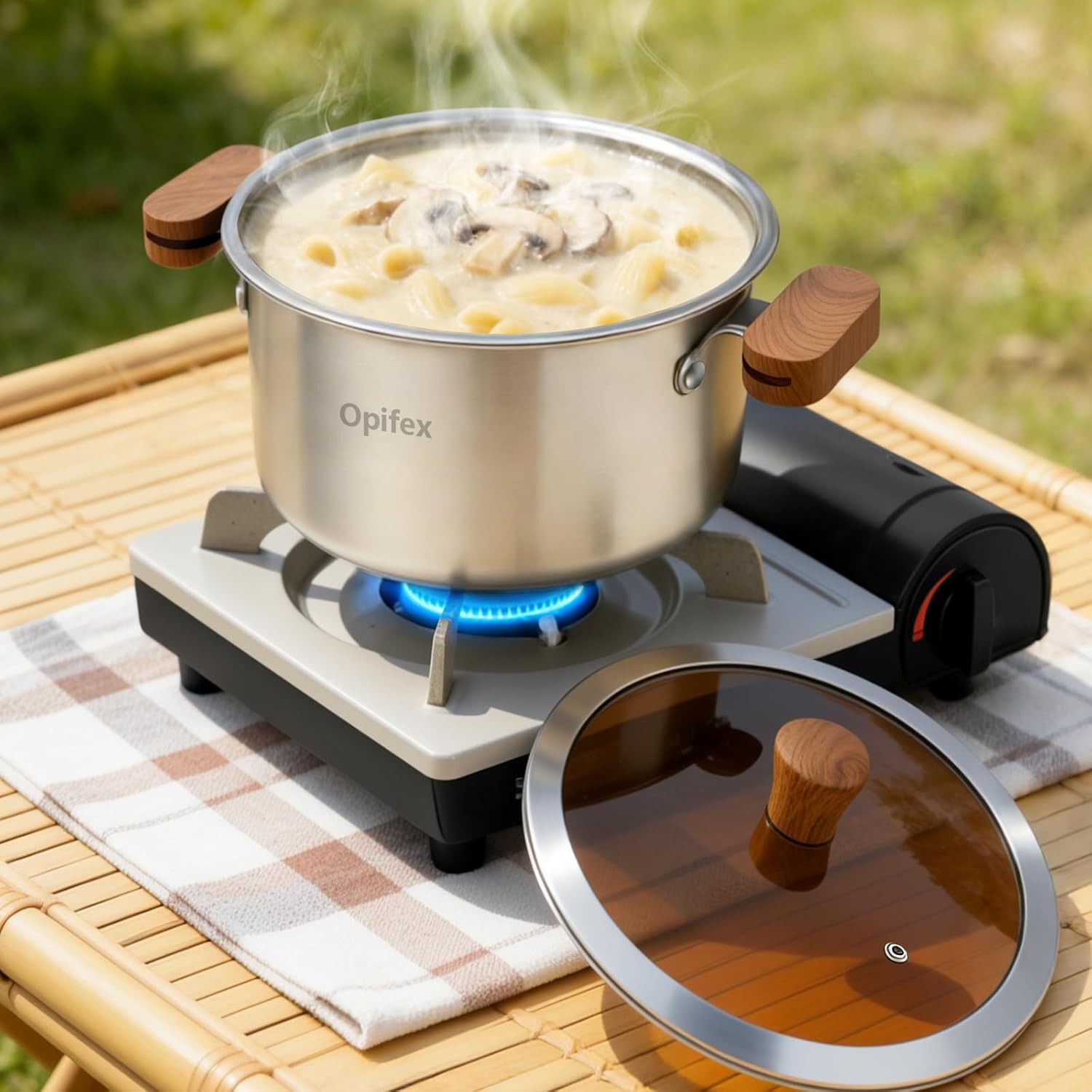
The smallest stovetop fry pot format — typically under one liter of total capacity — uses only 16–24 ounces of frying oil per session. That’s the lowest oil investment of any format in this comparison, and it produces the least waste for cooks who only fry occasionally.
The tradeoff is severe capacity limitation. A sub-1L pot can handle single doughnuts, a few pieces of calamari, small tempura batches, or a handful of fries. It will not accommodate a chicken thigh, a bone-in wing, or anything with significant surface area. The food simply won’t fit with proper oil depth — and cramming it in drops the oil temperature sharply, producing greasy, undercooked results.
One important safety note, flagged in owner reviews: mini pots with very small base diameters can be risky on full-size gas burners. If the burner’s outer flame ring extends beyond the pot base, open flame can contact oil drips or splatters on the pot’s exterior. The rule is straightforward — if the pot’s base diameter is smaller than your burner’s flame spread, don’t use that burner. Use the smallest available burner and keep a metal lid within reach.
Deep
$19.89
In stock on Amazon
Check price on AmazonMid-Tier Format: 68 oz Stovetop Fry Pot (~2L)
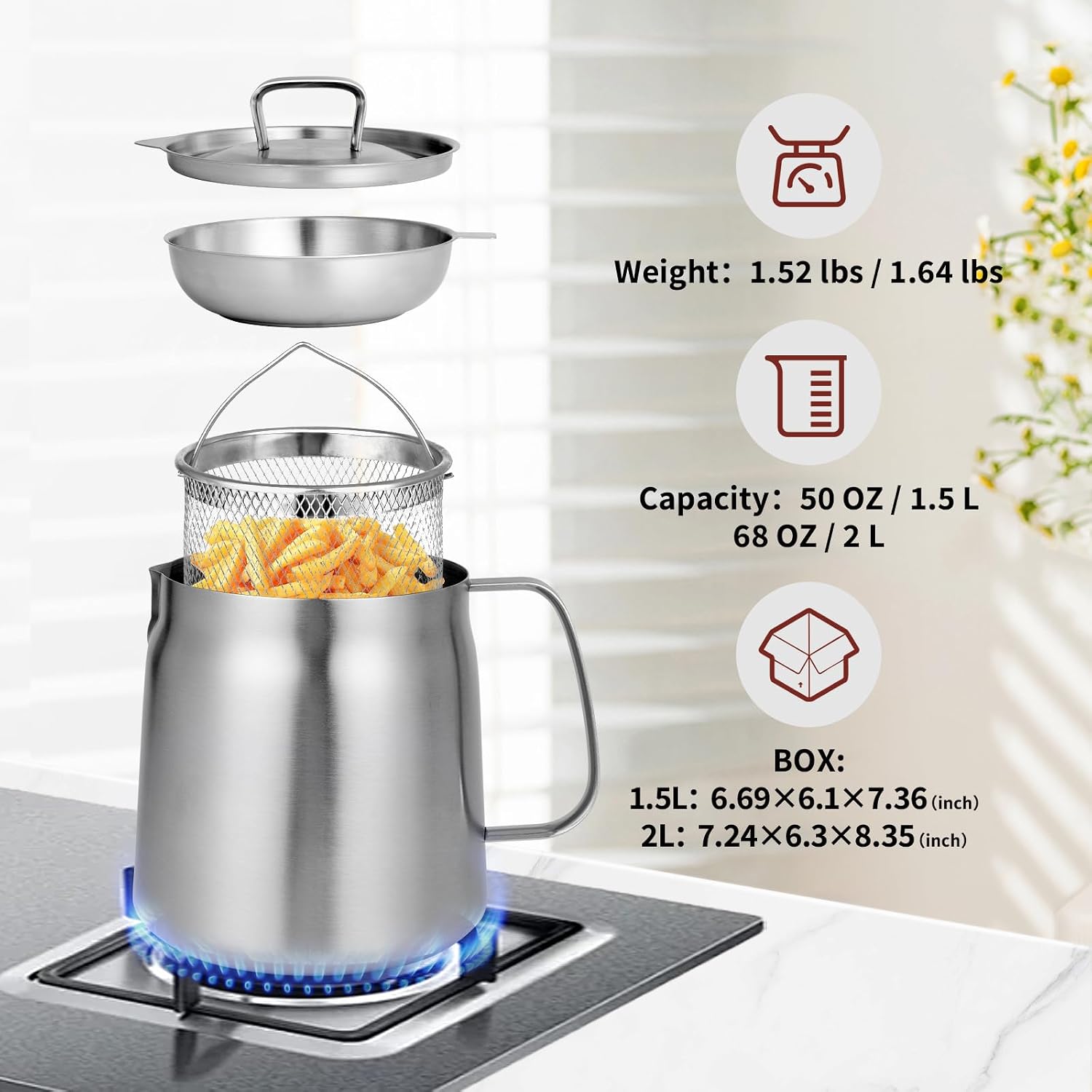
The 68-ounce stovetop pot is the practical sweet spot for solo frying. It requires 32–40 ounces of oil for a working fill — roughly half the oil demand of a standard countertop electric fryer — while still providing enough depth and surface area to cook a proper batch of chicken tenders, shrimp, mozzarella sticks, or small fries without crowding.
A critical calibration point: a “2L pot” never fills to two liters in practice. Oil at frying temperature expands slightly, and food displaces volume. A realistic working fill is 60–70% of nominal capacity, giving you 1.2–1.4 liters of actual frying oil. This is enough for solo meals but not enough for simultaneous multi-person portions.
This format’s primary weakness is the same as all stovetop pots: no built-in thermostat. The Cook’s Illustrated deep-frying technique overview identifies temperature management as the most common failure point for home fryers. Oil too cold produces greasy, soggy food; oil too hot burns exteriors before interiors cook. A clip-on frying thermometer rated to at least 400°F is non-optional equipment for this format. Without it, the 68-ounce pot is an incomplete tool.
68oz
$23.99
In stock on Amazon
Check price on AmazonPremium Format: 119 oz Stovetop Fry Pot (~3.5L) and Countertop Electric Fryer
At the top of the stovetop format range, the 119-ounce pot (roughly 3.5 liters) offers the closest thing to an electric fryer’s capacity without the electric fryer’s oil overhead. It typically arrives as a complete system — lid, tongs, strainer, and fry basket included — rather than just a pot, which matters for the solo cook who doesn’t want to source accessories separately. The included lid serves double duty as a splatter control tool during frying and an oil-storage cover between sessions.
Double-bottom construction — a design approach where the pot base incorporates an extra layer of stainless steel to distribute heat more evenly — is worth seeking at this price tier. Even heating is directly meaningful for frying quality: uneven burner hot spots create inconsistent oil temperatures, which leads to uneven browning and, in the worst cases, oil scorching in one zone while undercooking food in another.
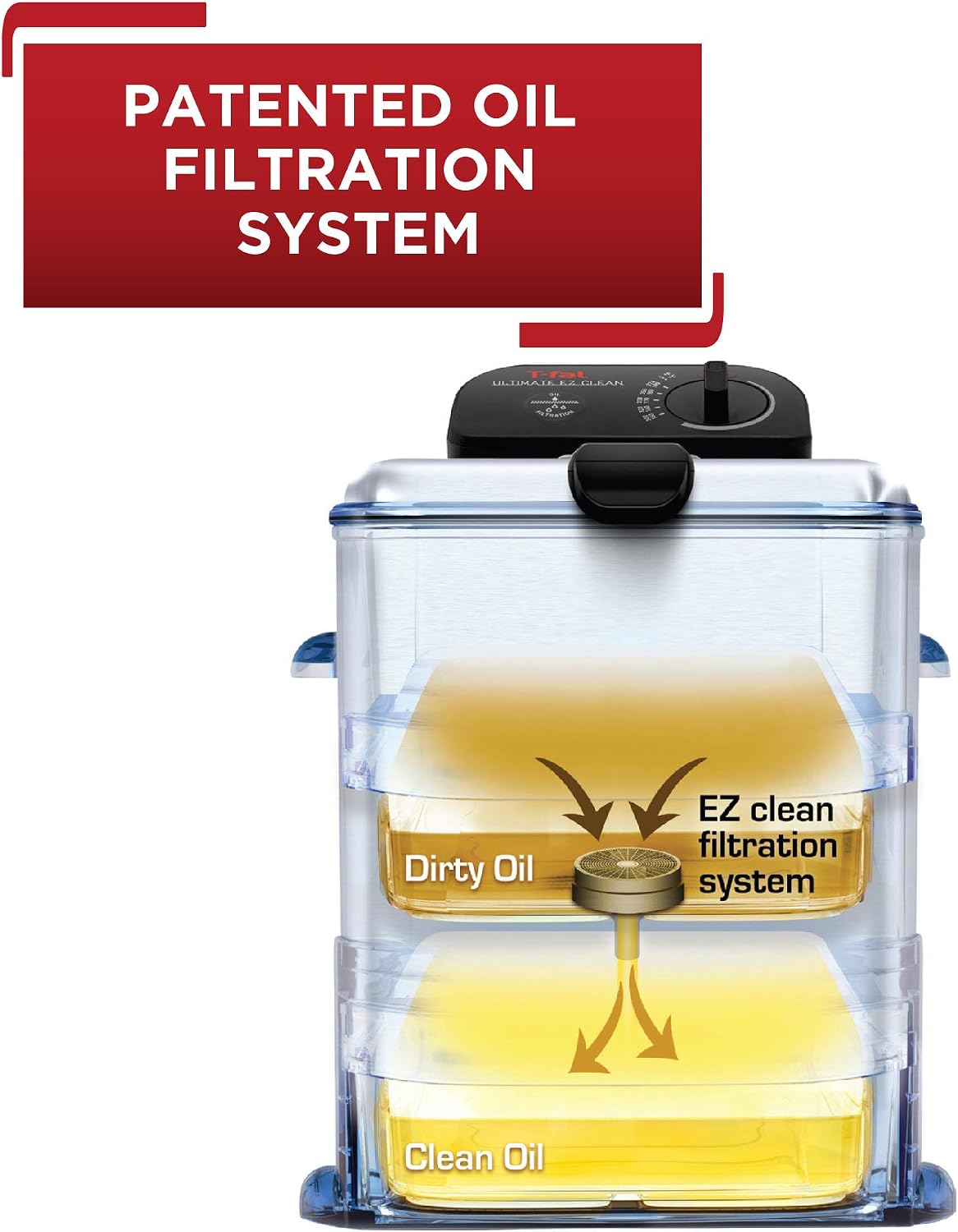
The countertop electric fryer, by contrast, solves the temperature control problem structurally. A built-in thermostat maintains oil temperature within a relatively tight band — typically ±10–25°F of your target, depending on the unit, as noted in the Serious Eats deep fryer equipment guide. That consistency comes at a cost: minimum oil fills of 64–128 ounces and more involved cleanup. For cooks who want reliable results without active temperature monitoring, the electric fryer at this tier remains the better tool.
Owner reviews consistently position even the 119-ounce stovetop pot as a small-batch tool. For one person eating a full serving, it’s adequate. For two people wanting simultaneous portions, you’ll fry in rotations — which works with a low oven holding the first batch warm, but it’s not a seamless multi-person solution. If you’re regularly cooking for three or four people, the right step up is a countertop electric fryer with a 1–1.5 gallon oil capacity, not a larger stovetop pot.
T-fal
$139.95
In stock on Amazon
Check price on AmazonSafety on Gas vs. Electric Burners: The Real Risk Calculus
Stovetop fry pots introduce open-flame proximity risk that electric fryers eliminate by design. NSF International’s NSF/ANSI Standard 4 for Commercial Cooking Equipment addresses open-flame clearance requirements in commercial contexts, but the underlying physics — flammable liquids plus open flame plus proximity — applies at the home scale too.
The practical hierarchy of burner safety for stovetop frying, from safest to least safe:
Induction burners are the best-case scenario. The burner surface itself doesn’t get hot — only the ferrous pot does — so oil drips that reach the burner ring don’t ignite. Temperature response is also fast and precise, which partially compensates for the lack of a built-in thermostat.
Electric coil burners eliminate open flame, which removes the most acute fire risk. Oil drips on a hot coil can smoke and smell unpleasant but are far less likely to produce a flame event than gas.
Gas burners are the most capable for rapid temperature recovery after adding cold food to hot oil, but carry the highest fire risk for small-footprint pots. If you’re on gas with a mini pot, use the smallest available burner, confirm the flame stays under the pot base, and never leave the fryer unattended.
For all formats on all burner types: keep a metal lid within arm’s reach during every frying session. A lid placed over a pot extinguishes an oil fire by smothering it. Water, a towel, or moving the pot are all wrong responses to a grease fire.
Decision Framework: If X, Then Y
The Food and Wine technique guide on home deep frying identifies two failure modes that dominate home frying disasters: temperature mismanagement and overcrowding. The stovetop versus electric decision maps directly onto both.
If you’re frying solo one to two times per week and your primary complaint about your current electric fryer is oil waste or cleanup volume: a 68–119 oz stovetop pot is the right move. You’ll use 40–60% less oil per session, cleanup is contained to the pot and basket, and the complete-kit formats deliver everything you need in one purchase.
If you want consistency without active temperature monitoring: stay with the electric fryer, or budget for a quality clip-on frying thermometer alongside the stovetop pot. The stovetop format is a competent tool for attentive cooks; it’s a liability for hands-off ones.
If you’re on a gas stove and considering a mini pot: verify the pot’s base diameter against your smallest burner before buying. This is a documented real-world risk, not a theoretical one.
If you’re regularly frying for three or more people, or doing large-format items like bone-in chicken pieces or full fries batches: the stovetop solo pot is the wrong tool at any size. A twin-basket countertop electric fryer is the appropriate tier.
If oil reuse and storage is a priority: the stovetop pot with a fitted lid wins on convenience. Strain the oil through the included strainer while still warm, let it cool to room temperature, fit the lid, and store in a cool dark location. Cook’s Illustrated’s deep-frying technique overview notes that most fry oils support four to eight reuses before quality degrades noticeably. Stainless steel is non-reactive and won’t impart flavor or accelerate oxidation the way some coatings can. Many electric fryers require decanting oil into a separate container for storage — an extra step the stovetop pot eliminates.
Frequently Asked Questions
How much oil do you actually need for a 68oz stovetop fry pot versus a countertop electric fryer? A 68 oz (2L) stovetop fry pot typically requires 32–40 oz of oil for a practical working fill — enough to submerge small batches at proper depth. A standard countertop electric fryer with a 2–3 quart tank requires 64–128 oz. The stovetop pot uses roughly half the oil volume per session.
Is a stovetop stainless fry pot safe on a gas burner? Generally yes for medium-to-large formats (68 oz and up), provided the pot’s base diameter covers the burner’s flame spread. For mini pots with a very small footprint, open flame can extend beyond the pot base and contact oil drips or splatters. Use the smallest available burner, keep a lid nearby, and never leave the pot unattended.
Can you reuse and store oil directly in the stainless pot between frying sessions? Yes — this is one of the format’s genuine advantages. Strain, cool, cover with the fitted lid, and store in a cool dark location. Cook’s Illustrated’s deep-frying technique overview suggests most oils support four to eight reuses before noticeable quality loss.
What foods work well in a small stovetop fry pot, and what don’t? Works well: french fries (small batches), donuts, calamari, tempura vegetables, small shrimp, chicken tenders, mozzarella sticks. Doesn’t work well: whole bone-in chicken pieces, large fish fillets, anything requiring a full basket. The Food and Wine home frying guide flags overcrowding as the second most common frying failure after temperature mismanagement — cold food dropped into a small oil volume tanks the temperature and produces greasy results regardless of technique.
Do you need a separate thermometer with a stovetop pot? Yes — this is non-negotiable. Without a thermometer, you cannot reliably hit and hold the 325°F–375°F window that most fried foods require. A clip-on candy/fry thermometer rated to 400°F costs $10–$20 and is the most important accessory in this format. The Serious Eats deep fryer equipment guide treats thermometer use as a baseline requirement for stovetop frying, not an optional upgrade.