If you’ve ever watched a pot of oil threaten to overflow because the turkey you dropped in displaced more liquid than you expected, you already understand the core problem with outdoor fry pot sizing — and you probably learned it the hard way. An outdoor fry pot is a large, typically aluminum or steel vessel designed to sit over a propane burner and hold several quarts of hot oil or water. It’s one of those purchases where the wrong size doesn’t just inconvenience you; it either limits every batch you cook or creates a genuine safety hazard. The three sizes you’ll encounter most often are 10 quarts (roughly 2.5 gallons), 18 quarts (about 4.5 gallons), and 30 quarts (7.5 gallons). This guide compares all three head-to-head — for wings, fish, shrimp, and turkey — with the math laid out so you can make a clean decision before your next outdoor cook.
The pattern in long-run owner feedback is remarkably consistent: cooks who eventually found their stride describe starting with something too small or too large, then landing on a middle size that unlocked a whole season of varied cooking. That narrative shapes everything in this comparison.
The Size-to-Food Matrix: What Each Pot Actually Fits
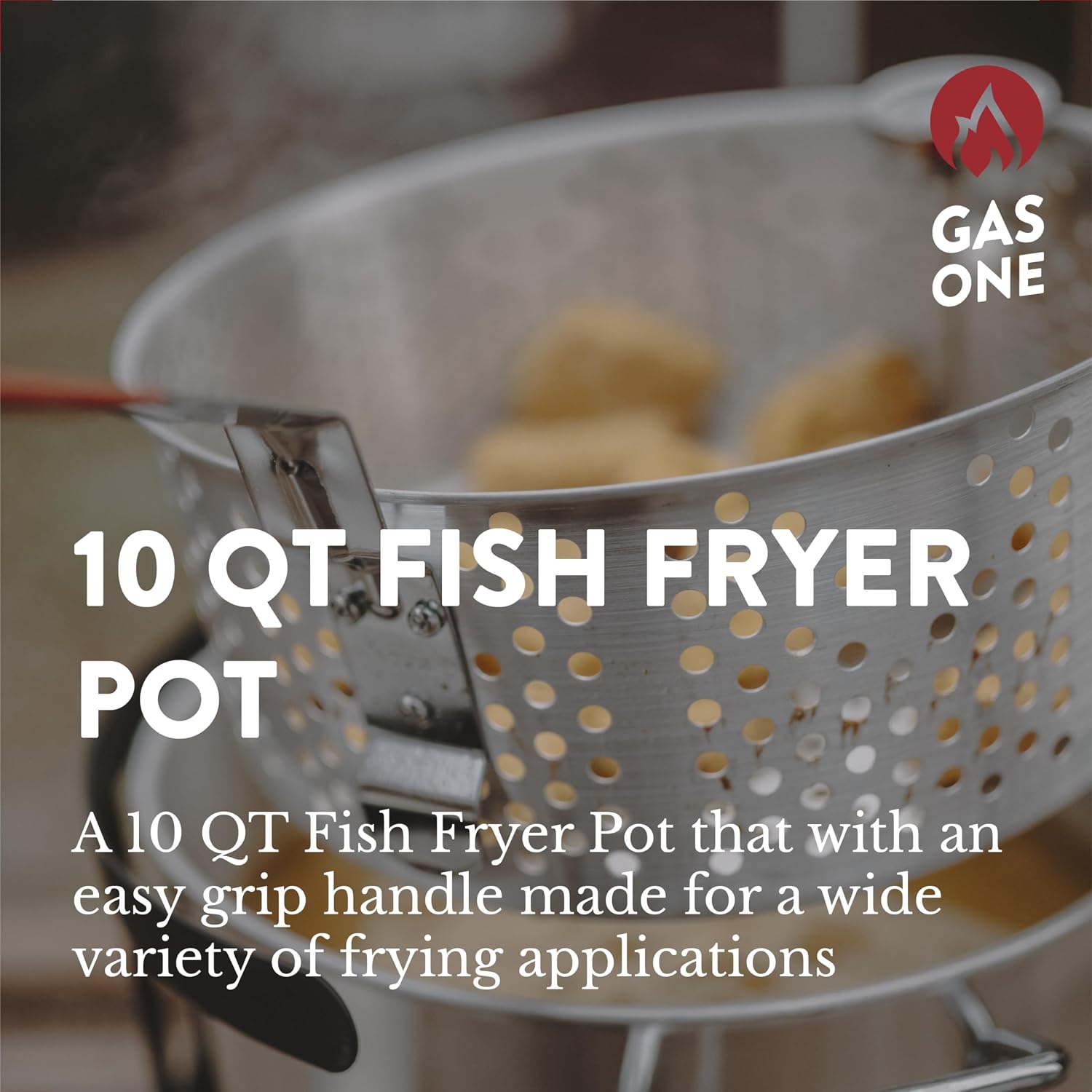
10QT Aluminum Pots (e.g., Gas One 10QT)
Ten quarts is the smallest category worth considering for outdoor propane frying. At that volume you’re holding roughly 6–7 quarts of oil — leaving the critical 3–4 inches of headroom required to prevent boil-over when food is submerged — and generating enough thermal mass to recover temperature between batches. That recovery speed is something a standard stovetop pot at the same size struggles to match, especially at high-volume cook rates, because home range burners typically deliver only 7,000–12,000 BTU while outdoor propane burners run 30,000–65,000 BTU depending on the unit.
What fits: Bone-in chicken pieces (4–6 thighs or drumsticks per batch), chicken wings (10–14 pieces depending on size), fish fillets, shrimp, potato wedges, and smaller whole fish. The aluminum handles and included basket in this size class are sturdier than the price point might suggest — a detail worth noting because thin, riveted handles are the failure point most often called out in lower-rated reviews across this category.
What doesn’t fit: A whole turkey. Full stop. Even a modest 10-pound bird displaces too much oil volume and sits too high in the pot for safe, even cooking. Serious Eats, in the article “The Food Lab: The Best Way to Deep-Fry a Turkey,” specifies that the bird must be fully submerged in oil with several inches of clearance — a geometry that requires at minimum a 28–30QT vessel for a bird of any appreciable size.
The stovetop question: Many owners use the 10QT on a standard electric or gas range burner for smaller batches, which works but comes with caveats. Induction cooktops will not work with aluminum pots. For stovetop tallow or lard frying, expect longer recovery times between batches compared to an outdoor propane setup.
Gas
$24.99
In stock on Amazon
Check price on Amazon18QT Pots (e.g., FireRiot 18QT)
The 18QT is the category that generates the most nuanced real-world feedback, and for good reason: it’s the size that handles a legitimate dual-use season — turkey at Thanksgiving, then shrimp tempura, whole fish, and vegetables through the rest of the year. For most occasional-to-regular home fryers, this is the pot they stop upgrading from.
What fits: Turkeys up to approximately 10–12 pounds. Cook’s Illustrated, in their “Equipment Review: Outdoor Turkey Fryers,” consistently recommends verifying that your specific bird fits before committing to a full oil load — a step that matters more than any manufacturer’s stated capacity. Beyond turkey: full batches of wings (20–24 pieces), whole fish, large shrimp tempura batches, and seafood boils for 2–4 people.
The turkey ceiling: Be honest with yourself here. If you regularly fry 14–18 pound birds, the 18QT is the wrong pot even if the marketing says “turkey fryer.” The displacement math doesn’t work safely at that weight class. Bon Appétit, in their piece “Everything You Need to Know About Deep-Frying at Home,” identifies the water-displacement pre-test as a non-negotiable step: place the raw bird in the empty pot, cover with water to submerge, remove the bird, mark the waterline, and that mark tells you your maximum safe oil fill level. If that level leaves less than 3–4 inches of clearance to the rim, the pot is undersized for that bird.
Versatility dividend: The 18QT’s real value proposition is that it’s the smallest pot most people can use for turkey while remaining manageable for everyday frying. At a working oil fill of roughly 12–14 quarts, you’re managing a pot that weighs 25–30 pounds with oil — heavy, but movable by one person with proper handles. The 30QT at working fill weight can approach 50–60 pounds, which is a two-person operation.
CHARD
$29.66
In stock on Amazon
Check price on Amazon30QT Pots (e.g., CHARD 30QT)
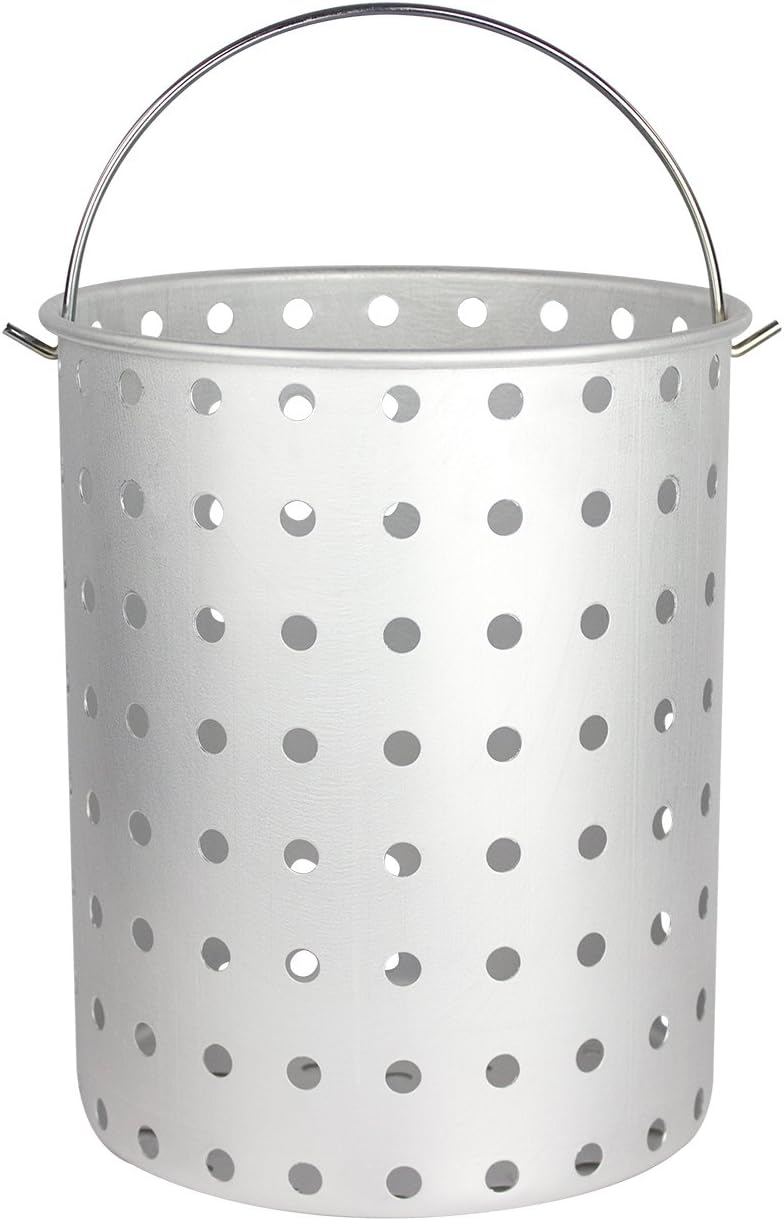
Here’s the honest framing on the 30QT category: buyer reviews are almost evenly split between turkey frying and seafood boiling, and the product descriptions lean into this. The CHARD 30QT is explicitly marketed and reviewed as a dual-purpose vessel — a detail that matters because the design choices that make a pot excellent for a low-and-slow crab boil (tall profile, good lid seal) are slightly different from those that optimize deep-frying (wide base for basket stability, heavy-gauge bottom for even heat distribution).
What fits: Turkeys up to 18–20 pounds, large whole fish, multi-pound shrimp batches, whole crawfish, corn, and crab legs for 6–10 people. This is the pot you buy when you’re feeding a crowd or when you entertain regularly.
The dual-identity tradeoff: Owners who use the 30QT primarily for seafood boils report that the large diameter makes it harder to maintain frying oil at a consistent depth for smaller foods. A batch of wings sitting in 8–10 quarts of oil in a 30QT pot is essentially frying in a shallow lake — the food floats and moves, heat distribution across the basket becomes inconsistent, and temperature recovery after a cold food drop is slower because you’ve got more oil surface area losing heat. Food & Wine, in “How to Deep-Fry a Turkey Safely,” addresses a related point: using significantly more oil than a recipe requires isn’t just wasteful — it extends heat-up time and strains the burner’s ability to maintain target temperature.
When 30QT is the right call: If you fry turkeys over 14 pounds at least once a year, or if you regularly host seafood boils for 6-plus people, the 30QT earns its storage space. If you’re primarily frying wings and fish with an occasional Thanksgiving turkey in the 10–12 pound range, the 30QT is overkill that costs you oil, time, and storage.
Bayou
$88.88
In stock on Amazon
Check price on AmazonBy the Numbers: Side-by-Side Capacity Breakdown
| Pot Size | Practical Oil Capacity | Turkey Limit (approx.) | Wings Per Batch | Working Fill Weight (oil only) |
|---|---|---|---|---|
| 10QT | 6–7 QT | Not recommended | 10–14 pieces | ~12–14 lbs |
Gas
$24.99
In stock on Amazon
Check price on AmazonCHARD
$29.66
In stock on Amazon
Check price on AmazonBayou
$88.88
In stock on Amazon
Check price on AmazonPractical oil capacity assumes 3–4 inches of headroom at rim. Turkey limits based on published manufacturer guidance and Cook’s Illustrated displacement testing methodology described in “Equipment Review: Outdoor Turkey Fryers.” Wing counts assume standard party wings, not jumbo.
The table above illustrates the most important sizing rule: there is no single pot that is simultaneously optimal for frying a dozen wings and a 16-pound turkey. The 18QT is the best compromise for most households. The 10QT and 30QT both serve real needs — they just serve different cooks.
The Basket Question: Aluminum vs. Stainless, and the Bayou Classic Double Basket
The basket included with most aluminum fry pots in this size range is aluminum — lighter, faster to heat, but more prone to warping at sustained high temperatures and more likely to develop surface oxidation over time with repeated oil contact. Current-generation outdoor fry pots in the 10QT class show improved handle sturdiness compared to earlier iterations, but aluminum baskets remain a weak point in long-term durability reviews, particularly for cooks who fry weekly or run high-volume batches.
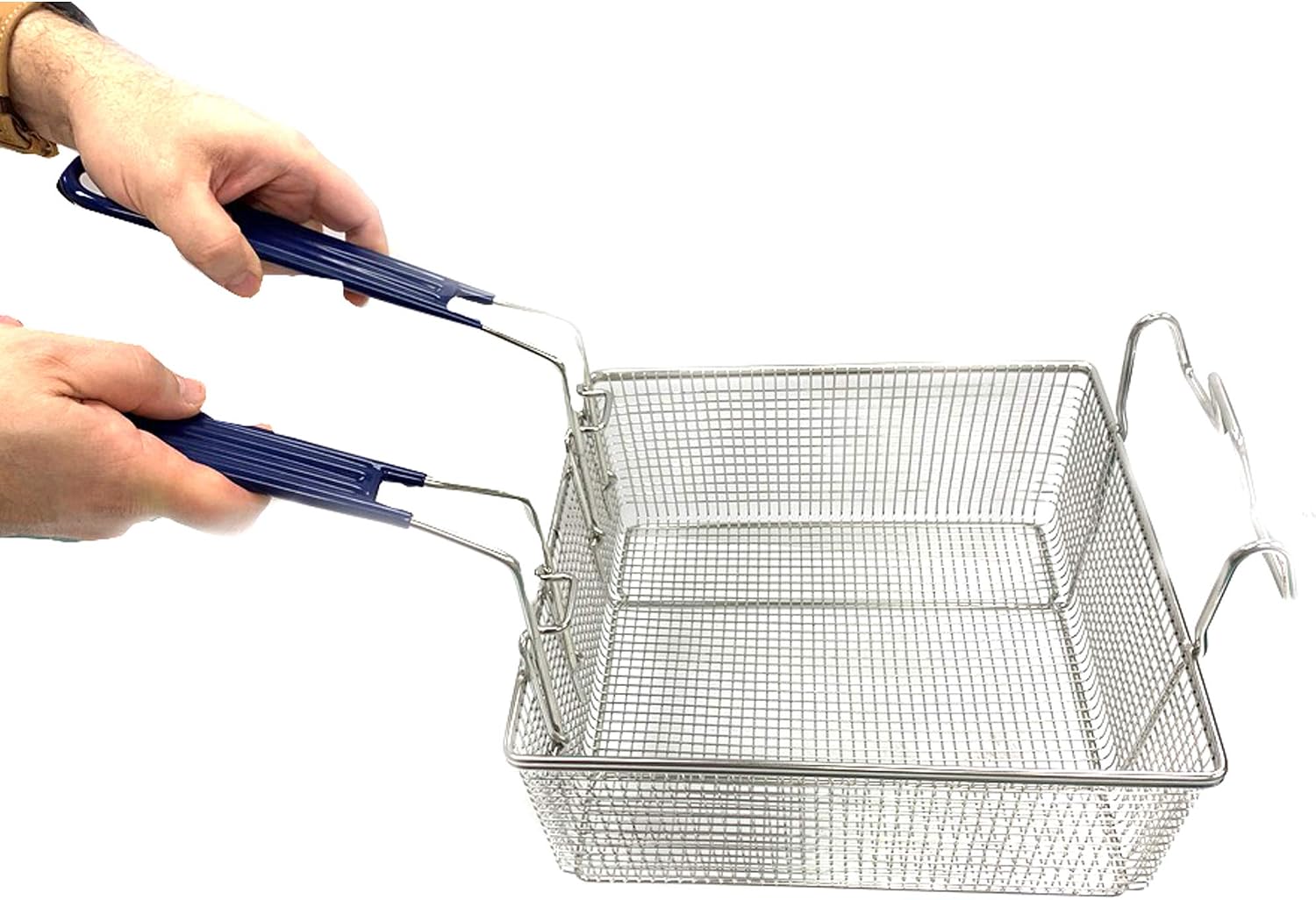
The Bayou Classic double basket system, which pairs with 4-gallon (approximately 16QT) and 9-gallon (approximately 36QT) fryer setups, surfaces repeatedly as the stainless upgrade path. What owners highlight most: the detachable cool-touch handle (which solves the burned-hand problem inherent in one-piece basket designs), easy disassembly for cleaning, and the ability to run two smaller baskets simultaneously rather than one large batch. For frying mixed orders — wings and fries, or shrimp and vegetables at the same time — the dual-basket configuration delivers a meaningful operational advantage even in a backyard context.
If you’re running an 18QT or 30QT pot regularly and making batches of varied foods, the stainless double-basket upgrade is the kind of investment that changes the experience more than moving up a pot size would.
Frequently Asked Questions
Can the 10QT aluminum pot be used on a regular stovetop or only on an outdoor propane burner? Most 10QT aluminum pots are designed and rated for outdoor propane burner use, but owners do use them on home gas and electric ranges. The functional limitation is BTU output: home range burners typically deliver 7,000–12,000 BTU, while outdoor propane burners run 30,000–65,000 BTU. For stovetop tallow or lard frying of chicken, the 10QT works — just expect longer preheat times and slower temperature recovery between batches. Induction cooktops will not work with aluminum pots.
Is an 18QT pot big enough to deep fry a full turkey? For turkeys up to approximately 10–12 pounds, yes — but you must run the water displacement test before committing to an oil load. Place the raw bird in the empty pot, cover with water until submerged, remove the bird, and check whether the waterline sits at least 3–4 inches below the rim. If it does, your oil fill is safe. Birds over 12 pounds push the limits of 18QT capacity and are better suited to a 28–30QT pot. Bon Appétit, in “Everything You Need to Know About Deep-Frying at Home,” calls this displacement test non-negotiable before any turkey fry.
Can I use an outdoor fry pot for seafood boils as well as frying? Absolutely — and many buyers specifically purchase 30QT pots with both uses in mind. The CHARD 30QT is reviewed almost equally for crab and crawfish boils as for turkey frying. One consideration: boiling (which operates at 212°F) is far more forgiving of pot geometry than frying (which typically runs 325–375°F and requires consistent depth and heat distribution). A pot optimized for boiling may work less efficiently for frying, but for home use the difference is manageable.
Are aluminum handles and baskets strong enough for large batches of chicken? Current-generation outdoor fry pots in the 10QT class show improved handle durability, and owners handling full chicken batches report no handle failures under normal use. The real vulnerability is repeated thermal cycling over many uses, which can loosen riveted handle attachments over time. If you’re frying weekly or running high volumes, a stainless basket — like those in the Bayou Classic double-basket system — is worth the upgrade for long-term reliability.
What is the real difference between a 10QT and 30QT for a home cook who fries a few times a year? For a home cook frying 4–8 times annually — seasonal wings, a fish fry, maybe one turkey — the 10QT and 30QT represent opposite failure modes. The 10QT limits your batch size and makes turkey frying impossible. The 30QT requires you to buy, heat, and dispose of far more oil than you need for everyday cooks, adds significant weight and handling difficulty, and costs you storage space. The 18QT is where most occasional-to-regular home fryers land, and the review record backs that up: it’s the size people stop upgrading from.
The Decision Rule
If your frying is mostly chicken, wings, fish, and shrimp with no turkey planned:
Gas
$24.99
In stock on Amazon
Check price on AmazonThe 10QT is sufficient and the more manageable choice. Serious Eats’ guidance in “The Food Lab: The Best Way to Deep-Fry a Turkey” makes clear that turkey frying requires a fundamentally larger vessel — so if that’s off the table, don’t pay for the capacity.
If you want one pot that covers a full season — turkey once or twice a year, plus regular wing and fish batches — and your turkeys stay under 12 pounds:
CHARD
$29.66
In stock on Amazon
Check price on AmazonThe 18QT is the right call. Cook’s Illustrated’ “Equipment Review: Outdoor Turkey Fryers” points to the importance of verifying fit before oil goes in the pot; at this size, most household birds clear that test.
If you fry turkeys over 14 pounds regularly, host seafood boils for a crowd, or want to run large batches without multiple drops:
Bayou
$88.88
In stock on Amazon
Check price on AmazonThe 30QT earns its size. Just budget for more oil and accept that you’ll need a partner to move it safely when full. Food & Wine, in “How to Deep-Fry a Turkey Safely,” notes that excess oil volume extends heat-up time meaningfully — factor that into your cook-day timeline.
Whatever pot you land on, the basket matters as much as the vessel. Aluminum baskets are fine to start; stainless with a detachable cool-touch handle — the Bayou Classic double-basket system being the most referenced upgrade in this category — is what makes the whole system more usable over time.