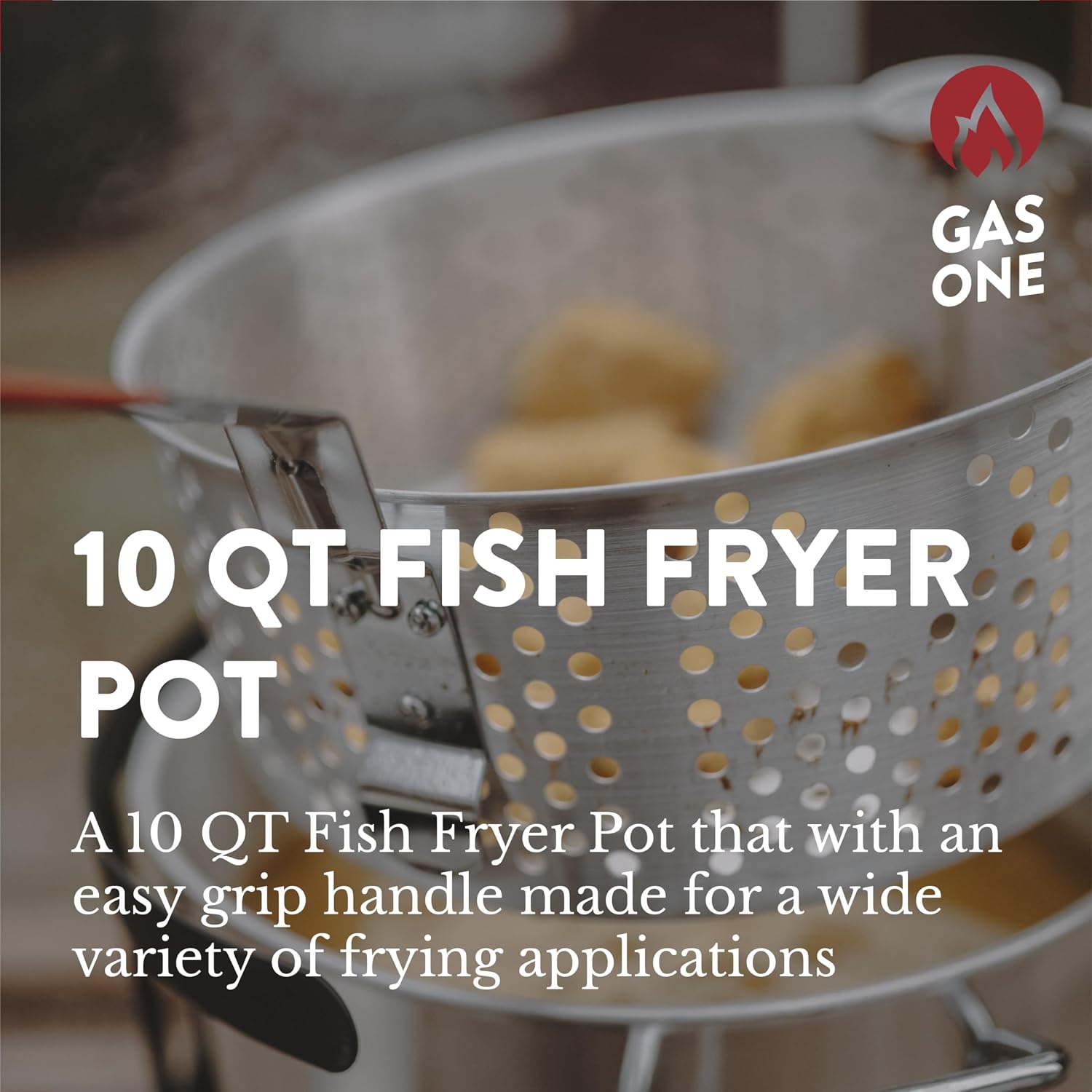
If you’ve ever watched a backyard fryer basket collapse, spilling hot oil onto a burner at a Fourth of July cookout, you already understand why outdoor fry pot selection deserves more than a scroll past the star rating. An outdoor aluminum fry pot is a large cooking vessel — typically 10 to 30 quarts in capacity — designed to hold several gallons of cooking oil over a propane burner outdoors. The basket is the wire-mesh insert you lower food into the hot oil and lift out when done. Together, they’re the core gear for backyard deep frying of chicken wings, whole fish, and whole turkeys. This comparison runs Gas One, CHARD, and FireRiot through the decisions that actually matter: capacity for your use case, basket structural limits, how accurately published dimensions match reality, and what accessory gaps will cost you before a holiday cook.
The Capacity Decision: Matching Pot Size to What You’re Actually Frying
The single most consequential variable in outdoor frying is oil volume relative to food volume. Serious Eats’ guide to deep frying establishes a foundational principle: food should displace no more than roughly one-third of your oil volume at the moment of submersion, or you risk dangerous oil overflow when moisture in the food causes rapid bubbling. For outdoor propane setups, that rule becomes a safety specification, not just a culinary preference.
Here’s the practical capacity stack by use case:
- 10 QT — handles 3–4 lbs of wings or a single large fish fillet batch; not suitable for turkeys
- 20 QT — manages fish, larger wing batches (6–8 lbs), and small turkeys up to roughly 10 lbs
- 30 QT — the minimum Serious Eats recommends for a 12–15 lb bird with safe oil clearance
- 32–36 QT — required for 18–20 lb turkeys, per King Kooker’s published accessory kit documentation
Understanding where Gas One, CHARD, and FireRiot land in that stack is the first filter. Each occupies a distinct position, and the right choice depends almost entirely on what you plan to cook most often.
Brand-by-Brand Comparison
Gas One: 30 QT Turkey-Capable with a Critical Structural Warning
CHARD
$29.66
In stock on Amazon
Check price on AmazonGas One’s most widely reviewed outdoor fry pot sits in the 30 QT segment, positioning it as a turkey-capable unit. Reviewers purchasing the Gas One system specifically for Thanksgiving frying consistently confirm usable capacity for birds in the 13–16 lb range. That capacity check passes. The more consequential Gas One signal, however, is structural.
Multiple Gas One reviewers surfaced a safety note that deserves prominent placement in any honest comparison: do not hang the fry basket on the rim of the pot. This is not an edge-case concern — it is a direct consequence of how outdoor aluminum fry pots are manufactured.
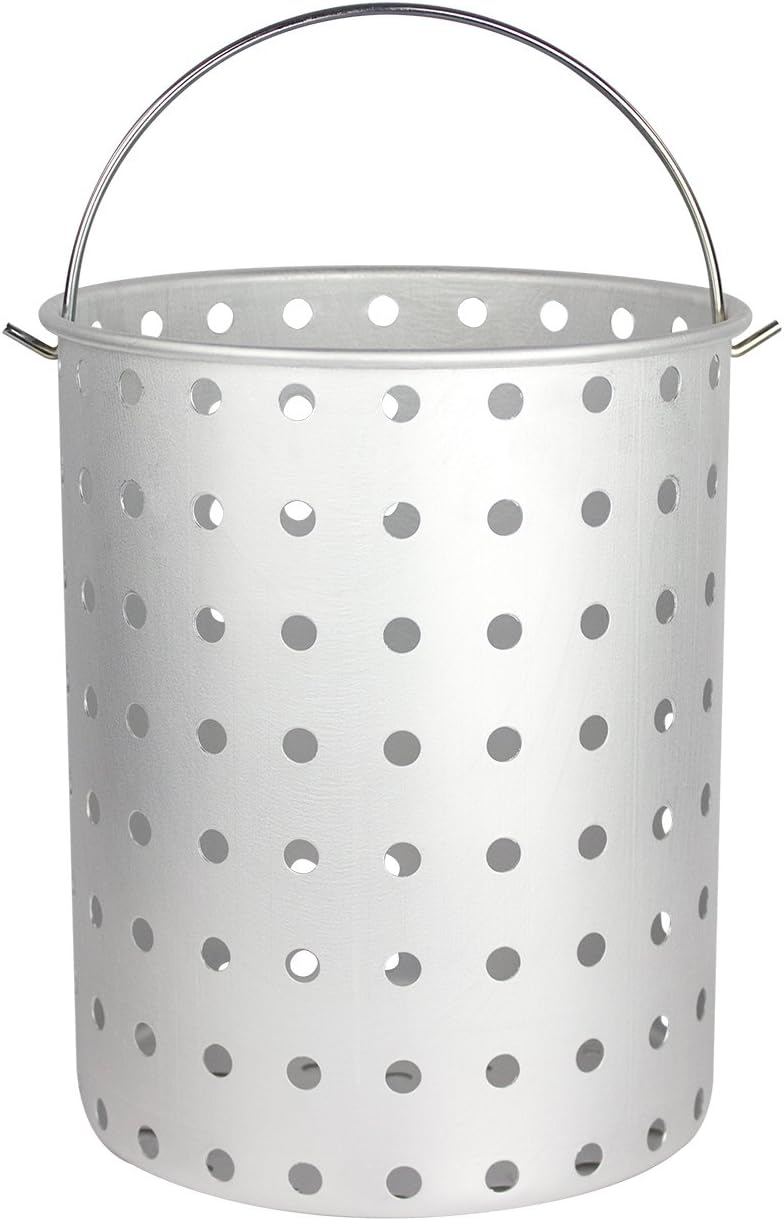
Unlike commercial stainless fryers that have reinforced basket support rails welded to the interior, outdoor aluminum pots are thin-walled vessels. The rim of an aluminum outdoor pot is not designed to bear dynamic load — meaning a basket filled with 4–6 lbs of wings and dripping oil. If you hang a loaded basket on the rim while plating food or checking temperature, you risk:
- Deforming the pot rim (aluminum work-hardens poorly under repeated stress)
- Tipping the basket into or away from the pot
- A leverage failure that sends the basket — and its contents — off the rim
Consumer Reports’ outdoor cooking equipment safety guidance emphasizes that thermal load and mechanical load together drive outdoor frying failures, and that equipment used outside its design envelope accounts for a disproportionate share of incidents. The correct procedure for any outdoor aluminum fry pot is a dedicated basket rest or a side hook bracket — never the pot edge. Gas One buyers documented this most explicitly, which is useful for all three brands reviewed here, because the risk is not Gas One-specific.
Best for: Thanksgiving turkey fryers who want a proven 30 QT footprint and are comfortable sourcing a basket rest accessory before their first cook.
CHARD
$29.66
In stock on Amazon
Check price on AmazonCHARD: Entry-Level Fish-Fry to Turkey Configurations, with a Dimension Accuracy Problem
King
$19.99
In stock on Amazon
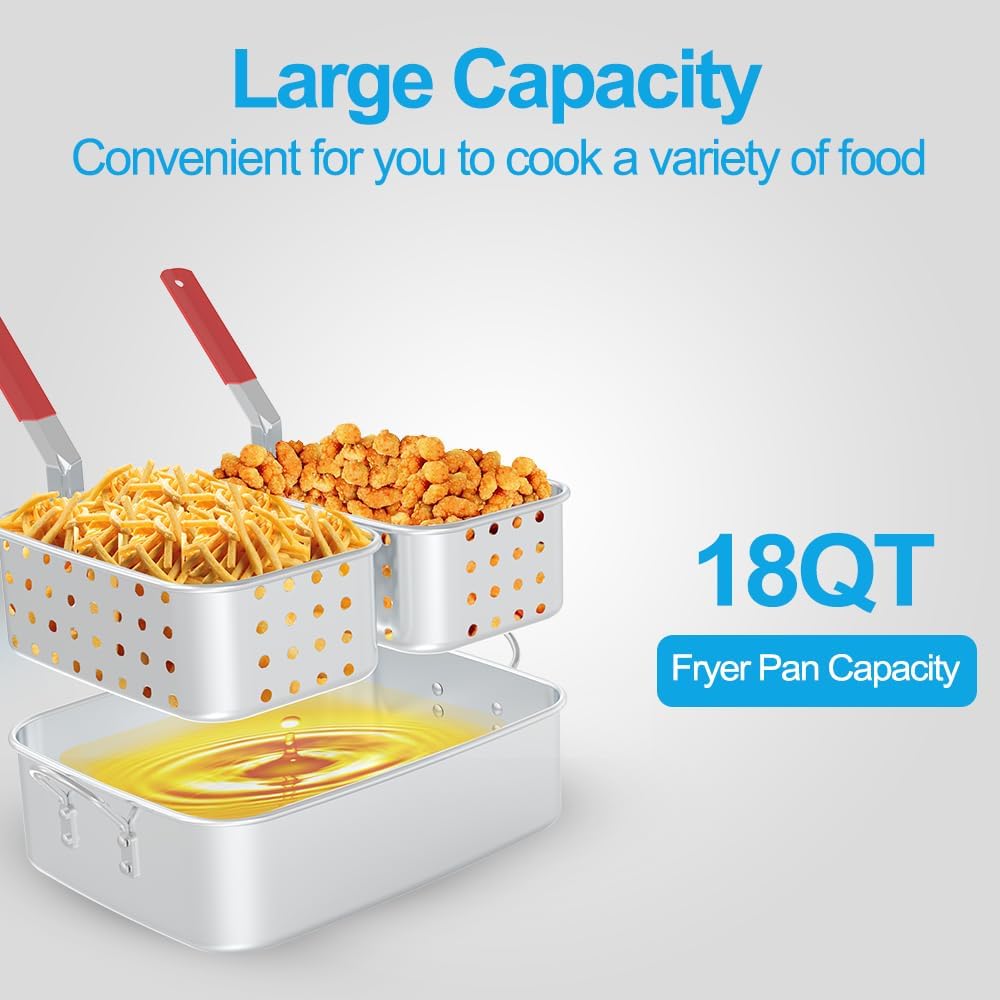
Check price on AmazonCHARD occupies both the entry-level 10 QT fish-fry range and larger turkey-fryer configurations, making it the broadest capacity spread in this comparison. The 10 QT size is well suited to fish fillets and small wing batches — workable for 2–3 lb loads with proper oil fill discipline. The larger CHARD configurations scale up to turkey territory.
What CHARD buyers caught — and corrected publicly in reviews — is a product listing error with real purchasing consequences: the pot is circular, not rectangular, contradicting how dimensions were presented in listings multiple buyers encountered. This matters for two concrete reasons.
First, if you’re sizing a replacement basket for a CHARD pot based on published rectangular dimensions (for example, “12 × 10 inches”), you will order the wrong basket. A circular pot requires a circular or fitted basket measured by diameter, not by a paired length-width spec. Second, this is a discipline-building moment for any outdoor fry setup buyer: published dimensions in outdoor cookware listings are not always trustworthy. Cross-reference the shape stated in the listing against buyer photos and reviewer corrections before ordering a matching basket.
NSF International’s NSF/ANSI Standard 4 on commercial cooking equipment makes clear that dimensional tolerances and stated configurations must match physical spec — a standard the consumer outdoor cookware market is not held to, which is exactly why reviewer corrections on shape and dimension carry practical weight.
For CHARD specifically: confirm diameter in reviews before ordering a basket. Do not rely on listing dimensions alone.
Best for: Budget-conscious buyers focused primarily on fish fries and moderate wing batches, willing to do shape-verification homework before ordering accessories.
King
$19.99
In stock on Amazon
Check price on AmazonFireRiot: Premium Build with a Documented Repeat-Purchase Trust Signal
FireRiot
$72.97
In stock on Amazon
Check price on AmazonFireRiot’s reviewer pattern is worth naming directly: across aggregated reviews, a consistent subset of buyers note that after using the unit at a cookout, they returned and purchased a second FireRiot pot as a gift for a family member or friend. In outdoor cookware — where category purchases are infrequent and one bad cook can sour someone on a product permanently — a same-buyer repeat purchase within weeks of the first is a strong behavioral confidence signal.
What drives it? Reviewers consistently point to the pot’s rigidity at high temperature and the quality of the basket mesh. Outdoor aluminum pots vary significantly in wall thickness and in how well they handle repeated thermal cycling — heating to 350°F and above, cooling, reheating across multiple seasons. Thinner-wall pots can develop hot spots and warp. FireRiot buyers in longer-run reviews note no warping across multiple turkey-season uses.
The honest tradeoff: FireRiot’s premium construction positions it at a higher price point than entry-level CHARD options. If you’re buying for a single annual turkey fry, the cost delta may favor a more basic unit. If you’re running wings and fish multiple times per season — or buying two units — FireRiot’s durability profile justifies the price difference.
Serious Eats’ guidance on turkey frying notes that for occasional seasonal outdoor use (roughly one to four cooks per year), aluminum is functionally appropriate material. FireRiot buyers running more frequent cooks than that are the ones reporting the most satisfaction with the unit’s longevity.
Best for: Frequent outdoor fryers, multi-unit buyers, and anyone who wants to skip the annual “is this pot warped now?” inspection before a holiday cook.
FireRiot
$72.97
In stock on Amazon
Check price on AmazonTurkey Lifting Accessories: The Part Everyone Forgets Until Thanksgiving Eve
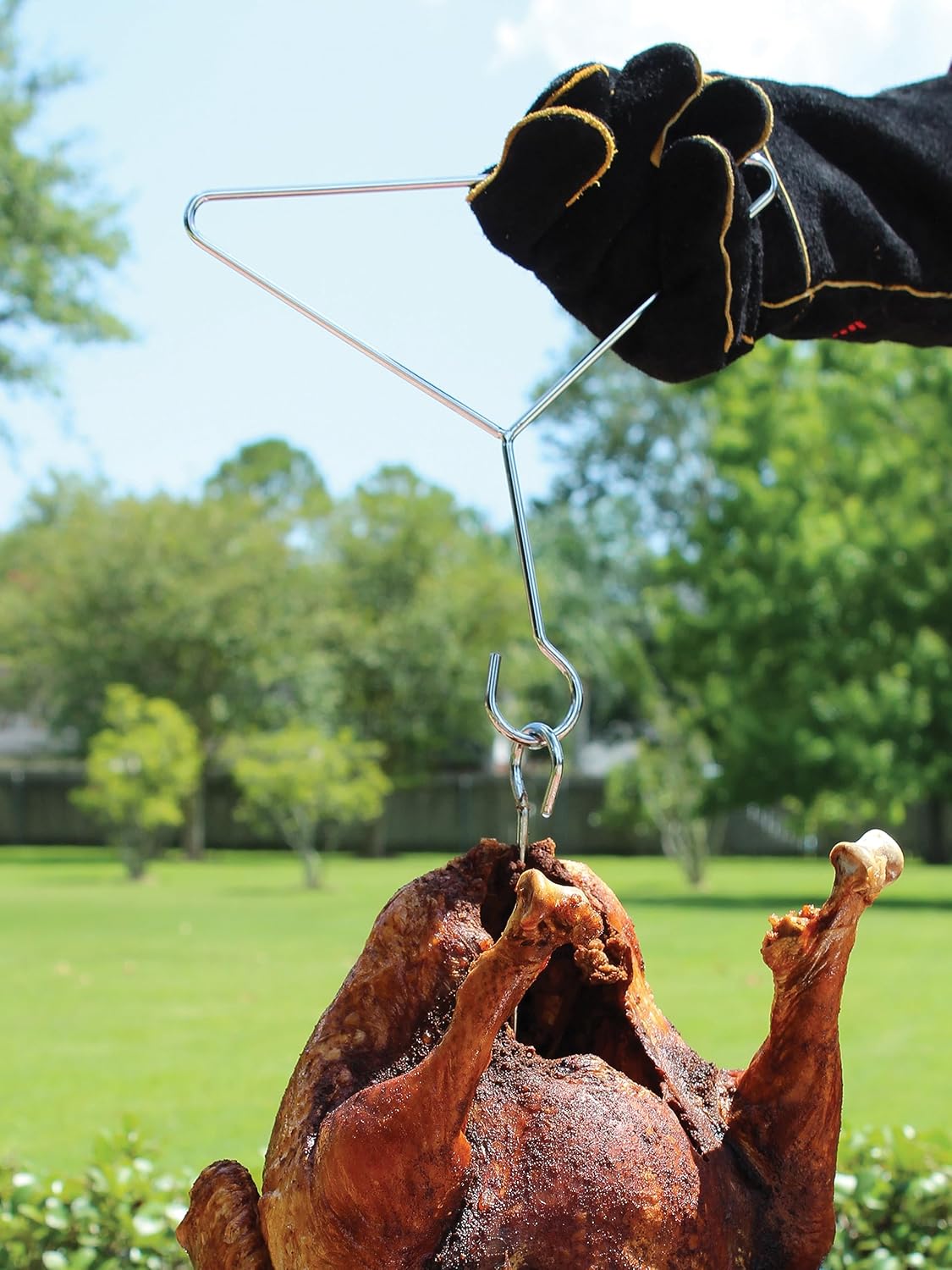
The turkey-frying workflow has a critical accessory gap that trips up first-time buyers every year: the lifting rod assembly. Lowering a 15-pound turkey into 350°F oil and retrieving it safely requires a dedicated lifting rig — typically a hook and rod that threads through the turkey’s cavity and allows two-handed lowering from a safe arm’s distance above the pot.
King Kooker’s threaded rod design, documented in their accessory kit product pages, addresses this with an assembly that disassembles flat for storage. This is an engineering choice, not merely a convenience feature: a flat-pack rod stores in a kitchen drawer rather than on a garage shelf, which means it gets put away properly and is findable the following November.
The replacement-part urgency is real and documented across multiple buyer accounts: reviewers explicitly note losing the lifting rod or hook between Thanksgivings and needing an exact replacement on short notice — sometimes days before the cook. King Kooker’s threading spec is proprietary, meaning a generic replacement rod may not mate correctly with their hook assembly.
The correct purchasing protocol: buy a backup rod assembly at the same time you buy the primary. Do not treat this as optional. If you’re building a Gas One or FireRiot turkey fry setup that ships with or recommends King Kooker-compatible accessories, this applies directly. CHARD’s smaller 10 QT fish-fry configurations don’t require a lifting rig, but their larger turkey-capable pots share the same accessory dependency.
Aluminum vs. Stainless for Outdoor Propane Setups: The Honest Framework
The material question surfaces in every outdoor fry pot discussion. Here is the framework:
Aluminum — all three brands reviewed here — is lighter, heats faster, and dissipates heat quickly, all advantages for outdoor propane burners where temperature is managed manually without a thermostat. The liability is structural: aluminum softens under prolonged high heat and deforms under mechanical stress, which is why the basket-rim-hanging warning above applies specifically to aluminum-walled pots.
Stainless steel outdoor pots are heavier, slower to heat, and significantly more expensive at comparable capacity. For operators running outdoor propane fryers as supplemental capacity on a weekly basis, stainless steel’s durability under repeated thermal cycling justifies the cost. Serious Eats’ turkey frying coverage notes that for occasional seasonal use — one to four cooks per year — aluminum is functionally appropriate.
NSF International’s commercial equipment standards, specifically NSF/ANSI Standard 4, govern commercial cooking equipment including commercial fryers. That certification framework does not extend to consumer outdoor fry pots. Neither aluminum nor stainless outdoor units in the consumer segment carry NSF certification — a fact worth documenting if you are an operator attempting to list equipment for health department review. Commercial-grade indoor stainless fryers from manufacturers such as Pitco, Frymaster, and Vulcan operate in that certified category; outdoor aluminum pots do not.
Frequently Asked Questions
Can I use a 10 QT aluminum fry pot for both fish and chicken wings at the same cookout? Yes, with sequencing and volume discipline. A 10 QT pot holds roughly 2–2.5 gallons of oil, workable for 2–3 lb batches of wings or fish fillets. Fry fish first — fish flavor transfers to oil more aggressively than chicken. Keep batches small (no more than one-third of oil volume by food weight) to avoid temperature crashes and boil-over.
Why shouldn’t I hang the fry basket on the rim of an aluminum outdoor pot? Aluminum pot rims are not load-bearing structures. A wet, food-loaded basket exerts both downward and lateral force on the rim. Aluminum deforms under sustained mechanical load, especially when hot. Rim-hanging risks deforming the pot, tipping the basket, or causing a failure that results in a hot oil spill. Use a dedicated basket rest or stand.
What size pot do I need to deep fry a full 15-pound turkey safely? Minimum 30 QT. Serious Eats and King Kooker’s published specifications both recommend 30 QT as the entry point for safe turkey frying, with 32–36 QT providing additional oil clearance margin for larger birds. The water-displacement test — place the uncoated turkey in the pot, cover with water to one to two inches above the bird, remove the turkey, measure the water volume — gives you the definitive oil fill line before your first cook.
How do I know if a 30 QT basket will fit my existing outdoor fry pot? Measure your pot’s interior diameter at its widest point, then compare to the basket’s stated outer diameter. For circular pots — verify this before ordering, because the CHARD dimension confusion is a documented real-world example — a basket should clear the interior wall by at least half an inch on all sides. Do not rely on “30 QT basket fits 30 QT pot” labeling; manufacturers do not share a universal dimensional standard.
Is aluminum or stainless steel better for an outdoor propane burner setup? For seasonal use of one to six cooks per year, aluminum’s faster heat response and lighter weight make it the practical choice. For weekly or commercial-adjacent use, stainless steel’s durability under repeated thermal cycling justifies the higher cost. Neither material carries NSF certification in consumer outdoor pot configurations.
What lifting accessories do I need to deep fry a whole turkey? At minimum: a lifting hook-and-rod assembly (King Kooker’s threaded rod design is the most widely referenced for flat-pack storage), heat-resistant gloves rated above 400°F, and a propane burner with a regulator shutoff reachable without leaning over the pot. Buy a backup lifting rod assembly when you buy the primary — replacement-part urgency before Thanksgiving is a documented, avoidable problem.