Deep Fryer Oil Filtration Without the Machine: Paper Cones, Skimmer Spiders, and Built-In Pot Strainers Compared
If your frying oil turns dark and acrid after just one use, the problem usually isn’t the oil — it’s the small burned particles left floating in it. Every time you fry, crumbs of breading, loose batter, and food proteins settle into the oil and keep cooking at high heat long after you’ve pulled the food out. Those particles are what degrade oil fast, give fried food a bitter edge, and — if you’re running a food-truck or ghost-kitchen operation — eat directly into your oil budget. Filtering the oil removes those particles and dramatically extends how many fry sessions you get per batch. Dedicated oil-filtration machines do this beautifully, but they start around $500 and scale into the thousands. The good news: three low-cost tools — paper cone filters, skimmer spiders, and the built-in strainers on stovetop fry pots — can get the job done when you understand what each one is actually capable of, and what it isn’t.
The Core Tradeoff: Filtration Fineness vs. Speed
Before comparing tools, it helps to think in terms of particle size. Burned breading crumbs are the big culprits — visible with the naked eye, easily caught by most mesh. Fine breading dust, dissolved proteins, and carbonized fines are much smaller — measured in microns (millionths of a meter) — and they’re what turns oil from golden to brown even after you’ve strained out the obvious debris.
The filtration hierarchy, roughly:
| Method | Approximate particle retention | Typical throughput |
|---|---|---|
| Paper cone filter (food-grade) | ~10–25 microns | Slow — gravity-fed, ~1–2 qt/min |
| Fine-mesh skimmer spider (150–200 mesh) | ~100–200 microns | Fast — active skimming during fry |
| Built-in pot strainer (coarse mesh) | ~500–2000 microns | Instant — catches only large debris |
Particle-retention figures above are derived from manufacturers’ published specification sheets for commercial oil-filter paper and standard mesh-count conversion charts published by the wire-cloth industry. Serious Eats, in their guide to filtering and storing frying oil, makes the practical implication explicit: coarse straining removes visible crumbs, but dissolved fines remain and continue degrading the oil. For most home cooks and many food-truck operators, the winning system isn’t one tool — it’s a layered stack.
How the Three Tools Compare
Each of these tools occupies a different position in the filtration workflow. The sections below examine them in order of the particle-size fineness they handle, from coarsest to finest.
Built-In Pot Strainers: Convenient, Coarse, and Often Misunderstood
68oz
$23.99
In stock on Amazon
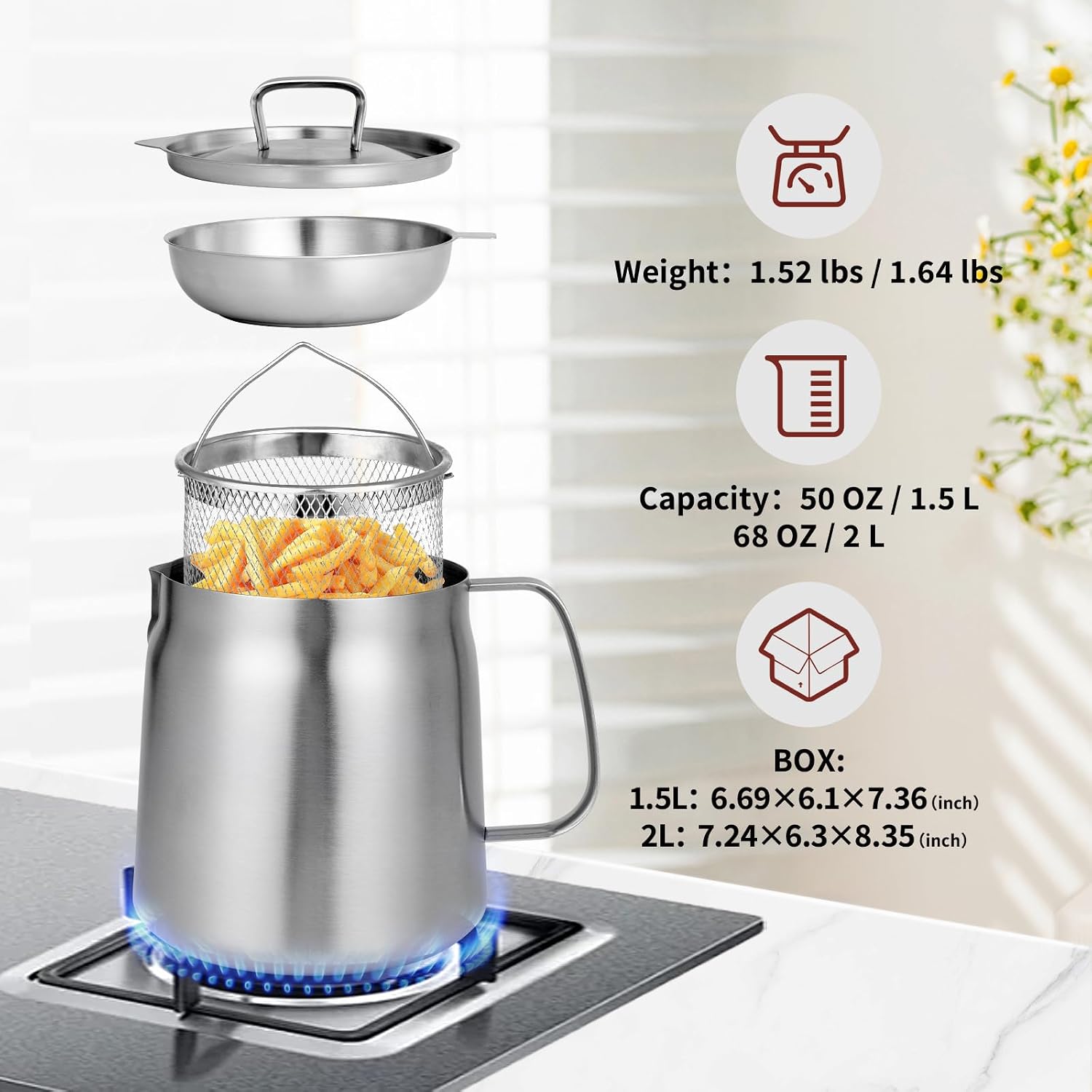
Check price on AmazonMany stovetop fry pots — the deep, heavy-gauge pots designed for range-top frying — come with a built-in strainer basket or a clip-on mesh strainer lid that lets you drain oil directly from the pot into a storage can. It’s a genuinely useful feature for one specific job: removing large debris and making storage cleanup faster.
But the built-in mesh is coarse, catching obvious chunks while passing the fine particles that do the most damage to oil quality over time. A practical two-stage approach addresses this directly: use the built-in strainer for the initial drain — getting the big material out quickly and safely — and then run the collected oil through paper cones as a second pass. That sequence answers the “can I use the built-in strainer as my only filter” question directly. Technically workable for one or two sessions; not effective if you care about oil longevity beyond that.
The pot strainer’s real value is ergonomic and safety-related: it lets you drain a full pot of hot oil without managing a separate funnel or cone holder while also handling heavy, hot cookware. For anyone pairing premium avocado oil with a stovetop fry pot, that integrated drain system makes a multi-session reuse workflow practical in a home kitchen without a dedicated filtration station.
Decision frame: Built-in pot strainers are a convenience and a safety feature, not a precision filtration tool. Keep them in the workflow as step one — then follow with paper cones if you want maximum oil life.
68oz
$23.99
In stock on Amazon
Check price on AmazonSkimmer Spiders: The Oil-Saving Move During the Fry
Wire
$24.99
In stock on Amazon
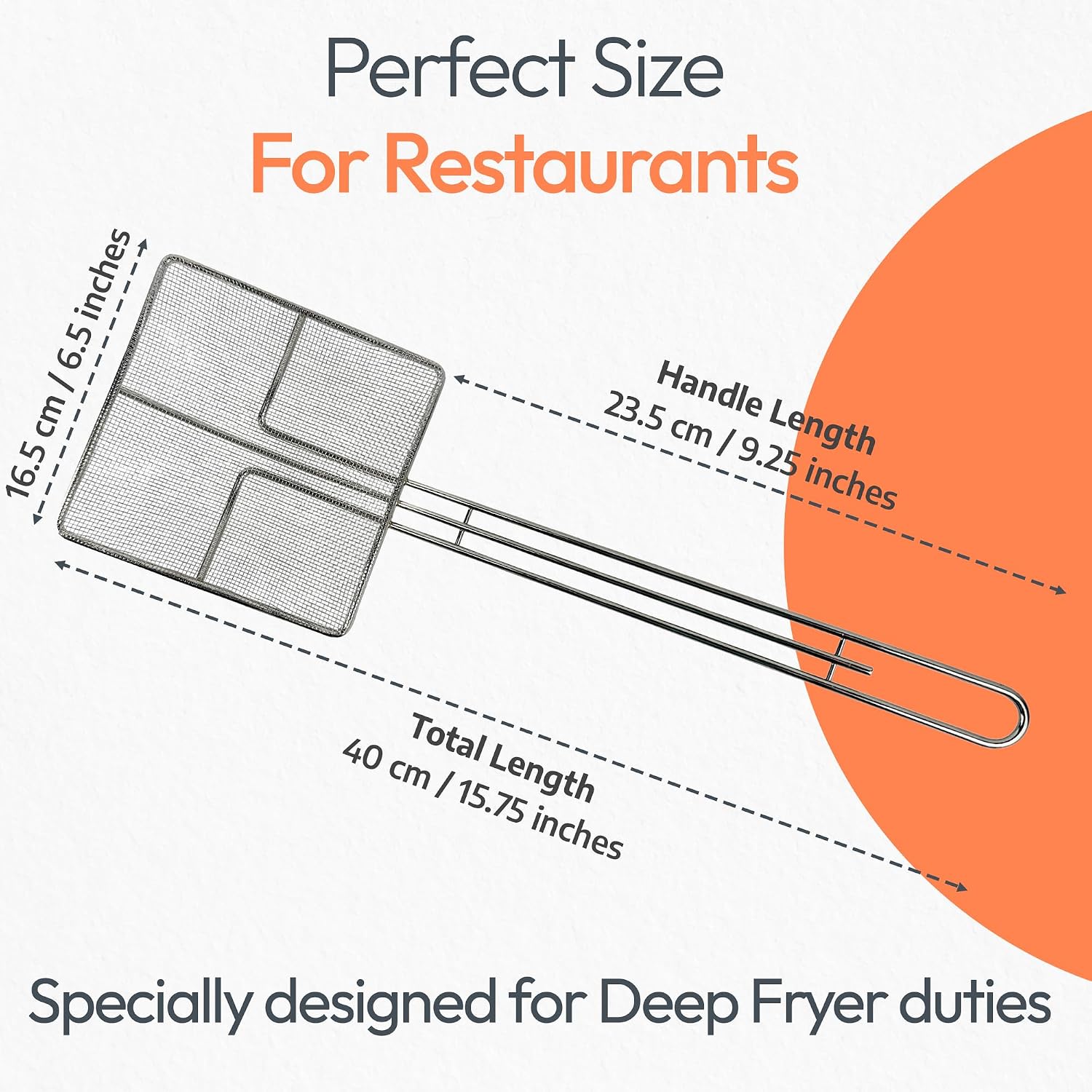
Check price on AmazonA skimmer spider — the wide, shallow wire-mesh scoop on a long handle used to retrieve fried food and skim debris from hot oil — is not a filtration tool in the traditional sense. It doesn’t filter the oil in storage. It manages particle load in real time, during the fry session, which is arguably more important than any post-session filtering step.
The logic is simple: breading that falls off in the fryer and sits in 375°F oil carbonizes within minutes. Every time you pull out a batch of wings or fish, loose breading stays behind. A spider skimmed through the oil between batches removes that debris before it burns and before it transfers bitter flavor compounds into the oil. Restaurant Business Online, in coverage of oil-cost management in foodservice operations, identifies proactive debris removal — skimming between loads — as a meaningful lever for extending oil life in high-volume kitchens. The framing from experienced operators is direct: consistent skimming reduces oil-replacement frequency, which is a line-item budget difference.
Mesh count matters here. A standard skimmer spider runs around 20–40 mesh (larger openings), which catches visible crumbs but passes fine breading dust. For operators frying heavily breaded items — Korean fried chicken, Southern-style fish, beer-battered anything — finer-mesh spiders (marketed as “fine mesh” or listing 150+ mesh count) make a meaningful difference in how much particle load accumulates between filter cycles. Food and Wine, in their overview of frying oil selection and management, notes that the type and volume of breading used has an outsized effect on how quickly oil degrades — a point that makes the mesh-count decision more consequential the heavier your breading is.
Decision frame: A skimmer spider is not optional if you fry breaded or battered foods at any volume. It’s the first line of defense — reducing the workload on your downstream filtration, not replacing it. Used consistently between batches, it extends the life of your paper cone filters and reduces how often you need to do a full post-session filtration pass.
Wire
$24.99
In stock on Amazon
Check price on AmazonPaper Cone Filters: The Slowest and Most Thorough Option
(100
$36.99
In stock on Amazon
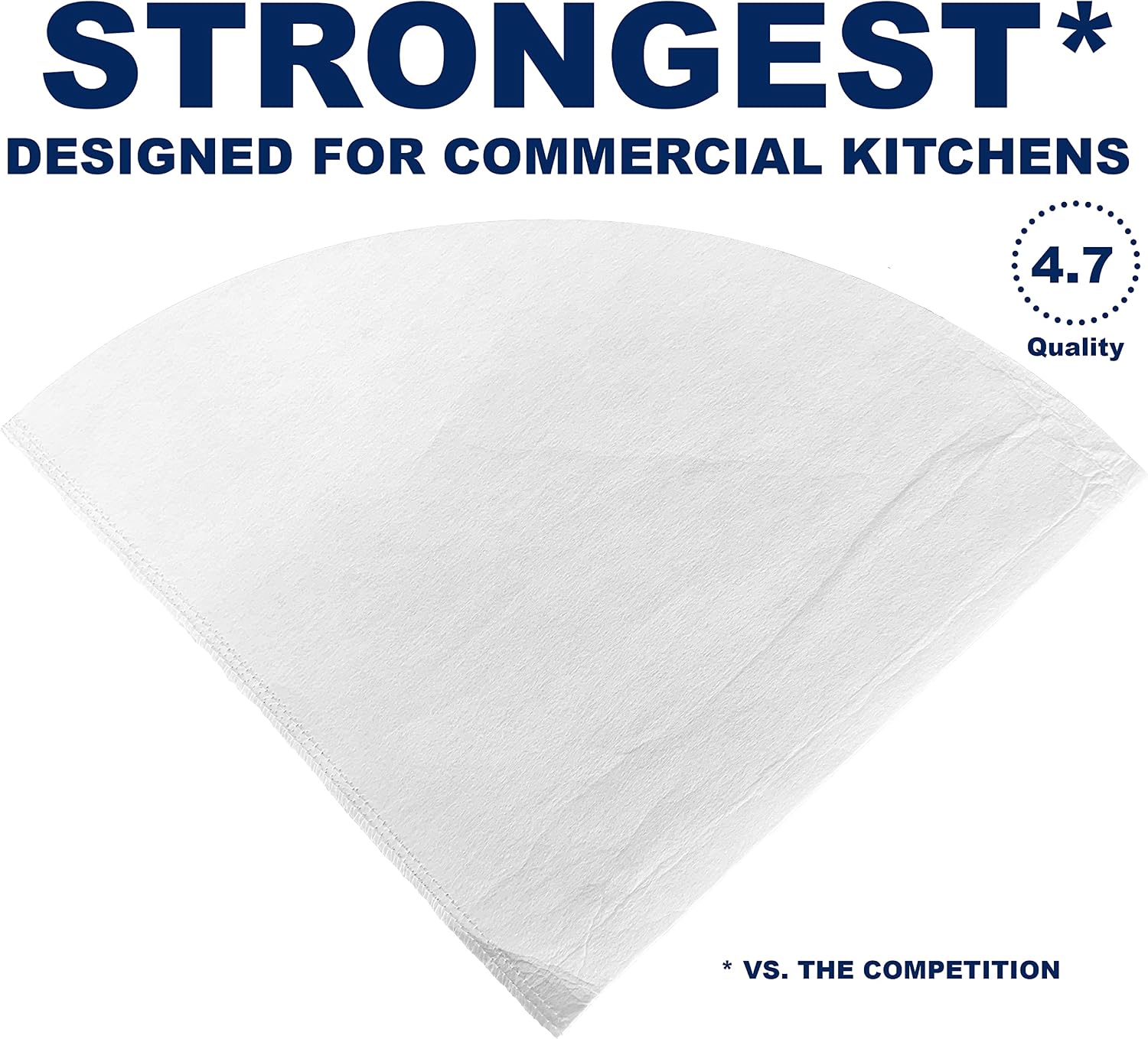
Check price on AmazonPaper cone filters — the same family of products used in commercial oil-filtration machines, sold loose for manual use — are the workhorse of serious at-home oil reuse. They’re designed to sit in a cone-shaped metal holder over a food-grade container while gravity pulls hot oil through the paper, leaving fines, crumbs, and carbonized particles behind at a retention level (~10–25 microns) that no mesh-based tool can approach.
The optimal setup involves a commercial-grade metal cone holder suspended or clamped over a 5-gallon food-grade container, with filtered oil going directly into storage. Using food-grade 5-gallon bags as liners inside the storage container adds easy cleanup to the system — a practical detail worth adopting if you’re filtering multiple gallons after a high-volume fry session.
Cook’s Illustrated, in their analysis of frying oil reuse methodology, notes that filtering while the oil is still warm — around 150–200°F — is more effective than filtering cold oil. Lower viscosity means fines don’t cling to each other and the paper, and the process moves faster. Cold oil through a paper cone can take twice as long and may not release all captured fines from suspension.
The tradeoff is speed. Paper filtration is slow by design. Filtering 5 gallons of warm oil after a Friday-night food-truck run takes 15–30 minutes of gravity filtration. That’s not a problem — the oil is sitting safely and cooling — but it means you need a holding container that can accept warm oil without warping or off-gassing. NSF International’s food equipment certification program overview addresses food-contact material requirements that apply to any container used for food-oil storage; food-safe certifications on buckets, bags, and containers used in a filtration station should be verified rather than assumed from generic plastic ratings.
Where paper cones win decisively: fine-particle removal that actually extends oil life across multiple sessions. For anyone using premium oils — avocado oil is the clearest example, given its smoke point, flavor neutrality, and higher per-gallon cost — getting 6–8 sessions out of a single batch instead of 2–3 makes the 15-minute wait a straightforward economic decision. Serious Eats, in their oil-storage guidance, recommends refrigerating filtered oil you plan to reuse within two weeks and keeping it in an airtight, light-blocking container to limit oxidation between sessions. They also recommend tracking first-use date and session count — the labeling habit is what actually tells you when to discard.
Decision frame: If you’re reusing oil more than twice and frying anything with dry breading, paper cones are the only budget tool that removes the fine particles driving degradation. The wait time is the price of the economics.
(100
$36.99
In stock on Amazon
Check price on AmazonThe Full System: What Serious Reusers Actually Build
For the home cook or small foodservice operator trying to squeeze maximum value out of premium frying oil, the optimized workflow isn’t a single tool — it’s three tools in sequence:
- Skimmer spider during the session — remove breading and debris between batches, reducing particle load before the oil ever hits storage.
- Built-in pot strainer at drain-down — catch large particles quickly and safely during the pour-out.
- Paper cone filter into a sealed storage container — fine-particle removal, leaving oil genuinely clean for the next session.
This layered approach is the practical answer to a common false choice: people often assume they need either a dedicated filtration machine or they’re stuck with degraded oil. The three-tool stack described above costs a fraction of a dedicated machine and handles the same core job — particle removal across multiple size ranges — for any home kitchen or small-scale commercial operation.
For storage: filtered oil should go into an airtight, light-blocking container, refrigerated or kept in a cool, dark space. Label the container with the date of first use and the session count. Discard at the first signs of off smell, excessive darkening, or foaming during heating — those are reliable sensory indicators that the oil’s degradation has passed the point where filtration helps.
Frequently Asked Questions
How many times can I realistically reuse frying oil if I filter it properly? With consistent paper-cone filtration and active skimming between batches, owner experience and Cook’s Illustrated’s oil-reuse analysis suggest 6–8 uses is achievable for neutral oils like refined peanut or sunflower oil. Heavily breaded proteins degrade oil faster than fries or vegetables. Smell and color are your practical indicators — if the oil smells acrid or looks dark brown despite filtration, it’s spent.
Do paper cone filters work with all types of cooking oil including avocado and peanut oil? Yes. Paper cone filters rated for food-contact use are oil-agnostic — they filter by mechanical particle retention, not chemical interaction. Avocado oil, peanut oil, refined coconut oil, and standard vegetable blends all pass through without issue. The main variable is viscosity: thicker or colder oils filter more slowly.
What size mesh do skimmer spiders need to catch fine breading particles? A standard 20–40 mesh skimmer catches visible crumbs. To meaningfully catch fine breading dust — the kind generated by heavily seasoned dry coatings or fine panko — look for spiders marketed as “fine mesh” or listing 150+ mesh count. For most everyday home frying, a standard mesh spider plus paper-cone post-filtration covers the gap.
Can I use the built-in strainer on my stovetop fry pot as my only filtration method? For occasional frying with two or fewer sessions per oil batch, it’s workable. For serious oil reuse — especially with premium oils — built-in strainers are too coarse to remove the fine particles that drive oil degradation. Pair the built-in strainer with paper-cone secondary filtration for meaningful results.
How do I store filtered oil safely between frying sessions? Use an airtight, food-safe container — dark-tinted or stored in a dark space to limit light-driven oxidation. Refrigerate oil you’ll reuse within two weeks. Label with first-use date and session count. Discard at the first signs of off smell, excessive darkening, or foaming during heating.
What is the difference between a fine-mesh and coarse-mesh skimmer for everyday home frying? A coarse-mesh skimmer (20–40 mesh) catches visible food debris and is the standard workhorse for retrieving fried items. A fine-mesh skimmer (100–200 mesh) catches much smaller particles — fine breading dust, small batter fragments — and is worth the upgrade if you fry breaded proteins regularly. For straightforward french fry or vegetable frying with minimal breading, the coarse skimmer is sufficient.