Your fry oil is one of the most expensive consumables in any kitchen — commercial or home. A fresh 35-pound jug of frying shortening can run $40–$70 at foodservice supply prices in mid-2026, and a single busy lunch service can push that oil past the point of no return if you let debris accumulate and burn. Filtration — removing food particles, carbon fines, and moisture from used oil so it stays usable longer — is the single highest-leverage habit you can build around your fryer. The tools to do it range from a $2 paper cone to a $200 in-tank filtration unit. This article covers the budget end of that spectrum: paper filter cones, skimmer spiders (the long-handled wire-mesh tools you see in every wok station), and basket strainer screens that sit inside your fryer tank. We name the tradeoffs explicitly, show the math, and give you a clear decision rule at the end.
One clarification before we dive in: “filtering” and “skimming” are related but different. Skimming means physically removing floating debris from hot oil during or between fry cycles — active and continuous. Filtering means passing used oil through a medium (paper, mesh, or cloth) that traps particles — typically done after service when the oil has cooled to a safe handling temperature. Both matter. Neither alone is sufficient for serious volume.
How the Three Tools Compare
The core comparison in this article is not which single tool wins — it’s which tool fits which operational context. Below, each tool gets its own H3 section, a plain summary of what it does and doesn’t do, and a tier marker reflecting its best-fit operator profile.
Paper Filter Cones: The Gravity-Filtration Workhorse
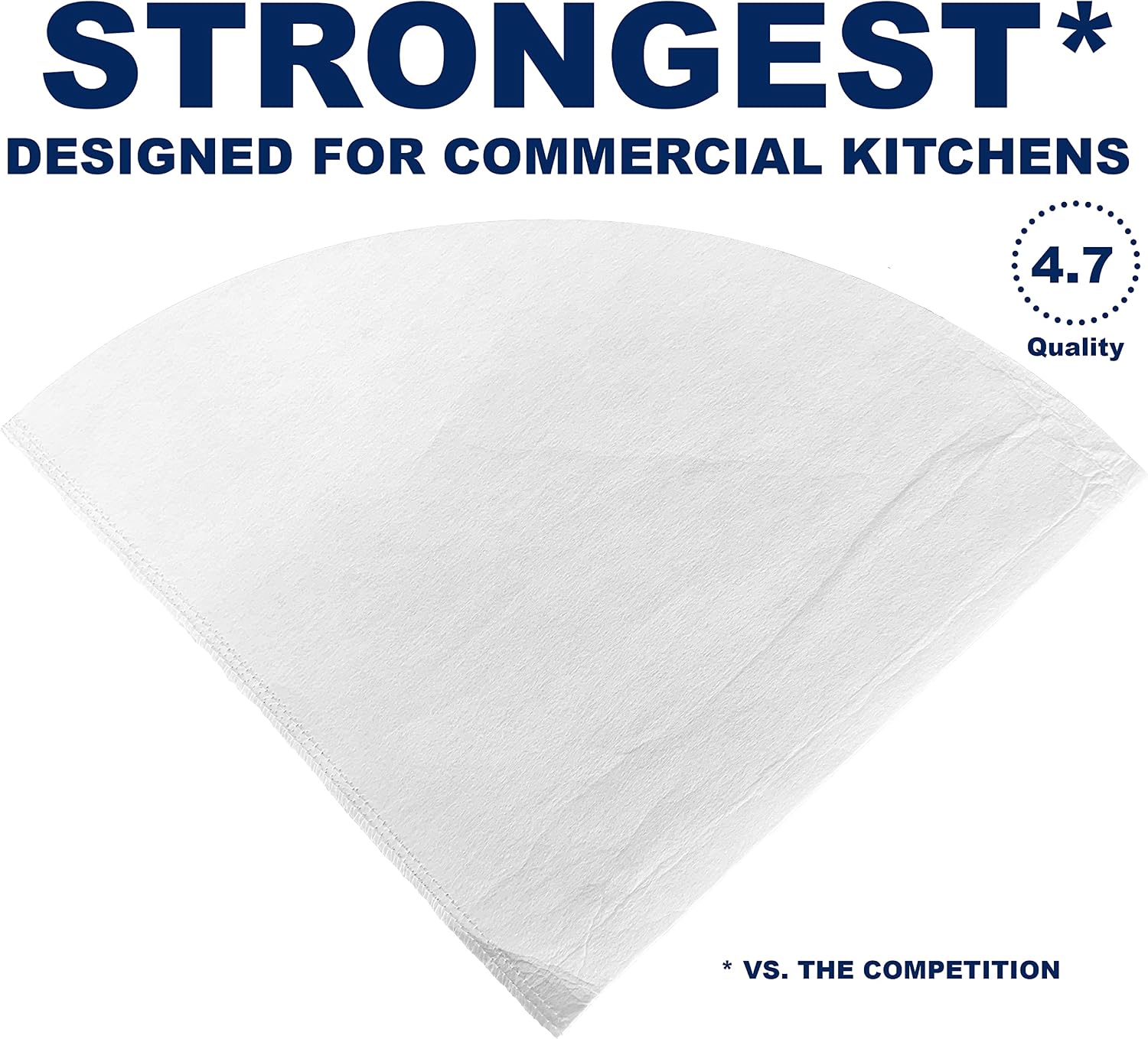
Paper filter cones — cone-shaped sheets of food-grade filter paper — are the entry point for most operators building a filtration habit on a budget. They work by letting used oil drip through the paper under gravity while the paper traps carbon fines, breading particles, and other solids that accelerate oil breakdown.
The typical three-piece rig costs under $30 total: food-grade filter cones (available in 11-inch and 18-inch sizes from multiple suppliers, including Pitco-branded cones designed for their built-in filtration drawers), a stainless metal cone holder frame, and food-safe poly bags to line the receiving container. The frame suspends the cone over the bag; oil drips through into clean storage. It produces genuinely clean filtered oil at a cost that is essentially negligible per session.
Writing in Serious Eats, J. Kenji López-Alt frames the benefit plainly in the article “The Best Way to Filter and Store Fry Oil”: diligent post-session filtration can extend usable oil life two to three times compared to unfiltered oil in the same fryer. That’s not a marketing claim — it reflects the chemistry of polar compound accumulation driven by burned particulate matter.
What reviewers actually report:
- Filtering after every session — rather than every two or three — meaningfully extends oil life. The discipline matters more than the specific cone brand.
- Cone filtration is slow. One jug of oil through a standard 11-inch cone takes 20–40 minutes depending on particle load and oil temperature. Build this into end-of-service workflow, not mid-service.
- The cones are genuinely multi-use across fats: operators report filtering bacon grease, beef tallow, duck fat, and rendered lard through the same food-grade cones. That confirms these perform as real fine-particulate filters, not marketing artifacts.
The one hard limit: Paper cones do not remove dissolved polar compounds — the invisible molecular breakdown products that turn oil dark and make fried food taste stale. They remove solids only. For polar compound management, you need either a commercial filter powder (such as magnesium silicate products sold under trade names like Magnesol) or simply an oil change. No budget filtration tool addresses this chemistry.
Mumufy
$21.99
In stock on Amazon
Check price on AmazonSkimmer Spiders: Active Debris Removal During Service
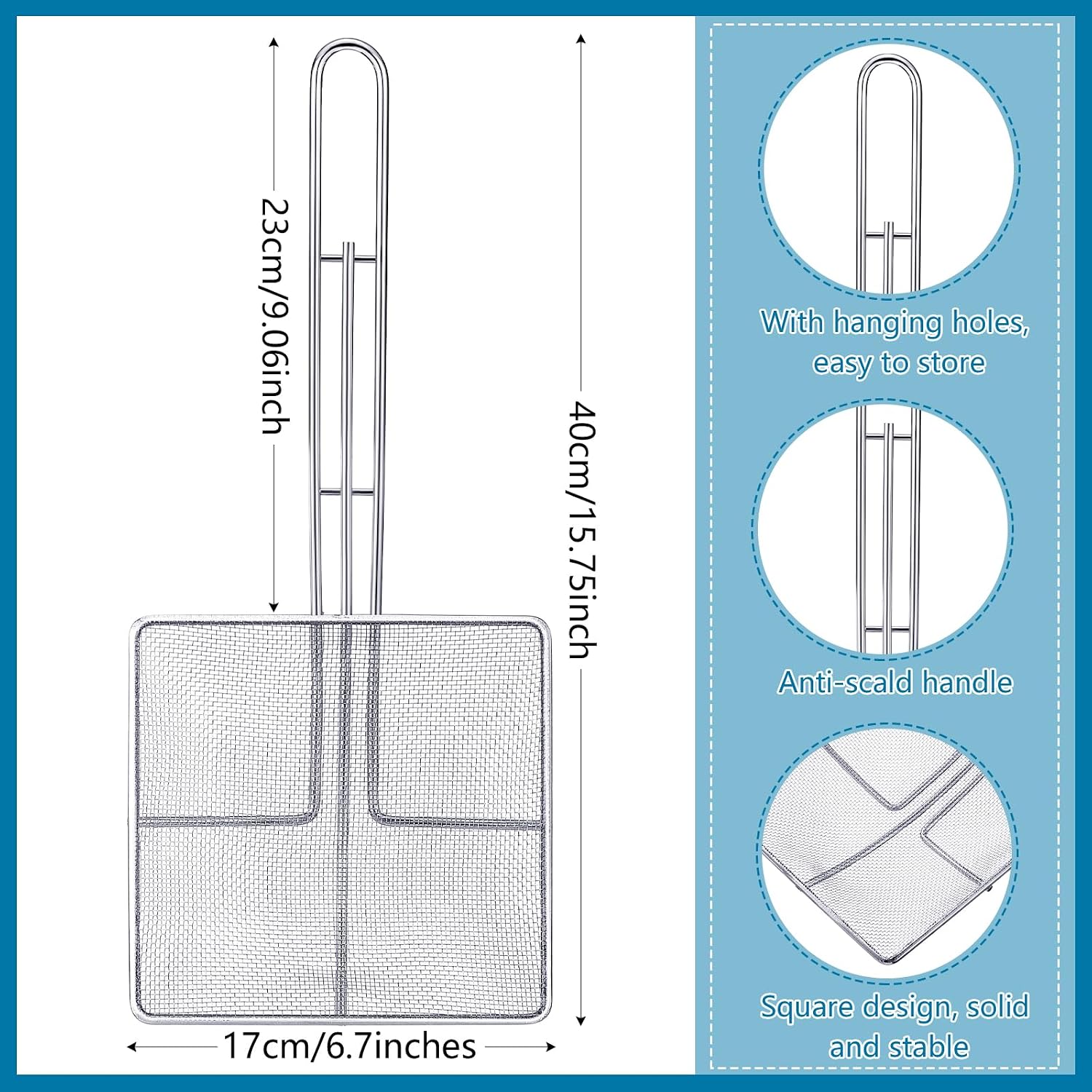
A skimmer spider — a wide, shallow wire-mesh basket on a long handle — is not a filtration device in the strict sense. It’s a debris-removal tool used during active frying. The ROI case is direct: actively skimming the oil surface between drops reduces the amount of burnt breading and batter that sinks to the fryer floor and burns, which slows oil darkening. That is a real cost mechanism — debris that burns accelerates the polar compound buildup that forces an oil change.
The square skimmer format (popularized by Chinese restaurant supply design) has a measurable advantage over the classic round spider for commercial fryers: it reaches the corners of rectangular fryer tanks more effectively. Operators on the commercial side note this explicitly and consistently. For home-fryer users frying in circular pots, the round format is fine.
Food Service Equipment Reports, in its 2025 overview “Oil Quality and Filtration: What Operators Need to Know,” describes active debris removal as a first-line defense in well-run foodservice operations — the step that reduces the load every downstream filtration tool has to handle. A skimmer spider is the practical implementation of that principle at a $15–$25 price point.
What skimming does and doesn’t do: Skimming removes floating solids and surface foam in real time, protecting oil quality during the fry session. It does not filter oil — you still need a post-service filtration step. Think of skimming as reducing the load your paper cone or strainer has to handle later, not as a substitute for it. Active skimming also improves in-service food quality directly: particles that would otherwise transfer onto the next batch are removed before they can.
(100
$36.99
In stock on Amazon
Check price on AmazonIn-Tank Filter Screens: Passive Debris Catch at the Fryer Bottom
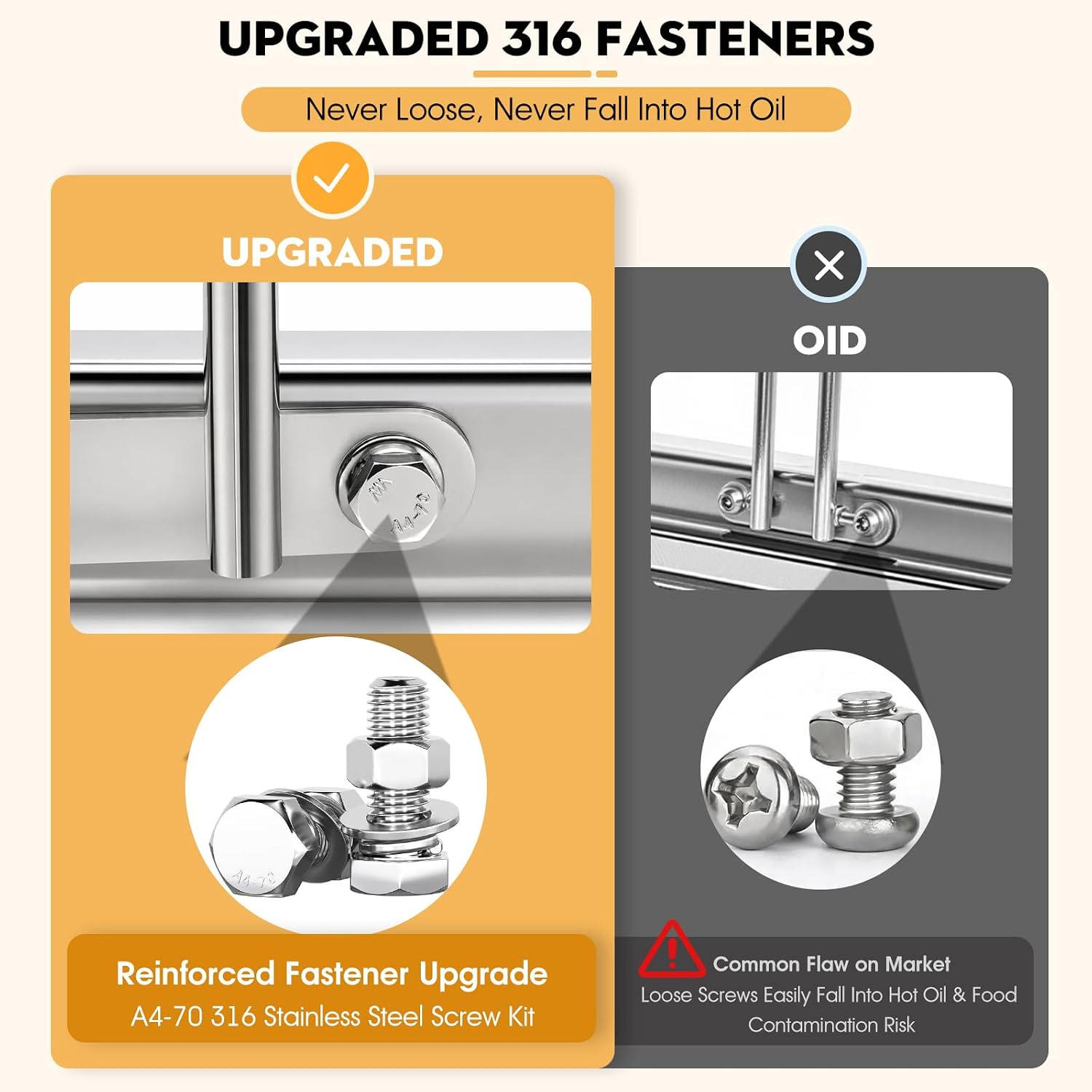
In-tank filter screens — perforated stainless or fine-mesh screens that sit in the bottom of a fryer tank — represent the most passive form of debris management. They require no action during service; they simply intercept particles before those particles can settle on heating elements or burner tubes and burn. For operators who want to build a filtration habit with zero active labor during service, this is the entry point.
The AF45/TK45 in-tank filter screen format has a strong endorsement pattern from food truck operators specifically. The use case is direct: a fryer on a food truck takes more vibration, gets used hard, and may go longer between full oil changes than a brick-and-mortar restaurant. The screen catches debris that would otherwise require manual scrubbing during cleaning — a task that is both time-consuming and hard on the fryer’s interior surfaces.
The fit problem is real and documented. A common failure pattern — mirroring the basket fit problem covered elsewhere on this site — is ordering a screen listed as compatible with a specific fryer model number, only to find a size mismatch on delivery. Model numbers on product listings are not a substitute for measuring your actual tank dimensions. Per published OEM documentation from Frymaster and Dean, tank interior dimensions can vary by production year even within the same model family. Pull your fryer’s installation manual for exact interior dimensions, then cross-reference against the screen’s published dimensions before ordering. When in doubt, contact the fryer manufacturer’s parts line with your serial number — they can confirm the correct OEM screen dimensions for your specific unit.
Restaurant Business Online, in coverage of fry oil cost management in high-inflation conditions, notes that operators who use passive filtration aids consistently report lower cleaning labor costs in addition to reduced oil spend — both outcomes attributable to less burned debris accumulating in the tank.
Upgraded
$99.99
In stock on Amazon
Check price on AmazonThe Math: What Budget Filtration Actually Costs and Saves
By the numbers
- Paper cone filtration after every session: 2–3× oil reuse extension (per Serious Eats, “The Best Way to Filter and Store Fry Oil,” J. Kenji López-Alt)
- In-tank screen: passive debris catch, zero active labor required during service
- Skimmer spider: 2–5 minutes active labor per service hour; direct ROI via reduced oil darkening rate
- Cone filtration time: 20–40 minutes per jug at end of service (gravity-dependent, particle-load-dependent)
- Total cost for all three tools: under $50 for a single-fryer operation
At mid-2026 commodity shortening prices, extending a 35-pound jug by even one additional service cycle saves $15–$20 per jug. A paper cone pack costing $15 that delivers three months of daily filtration pays for itself in the first week of use. The skimmer spider and in-tank screen are one-time purchases that pay back in reduced oil spend within the first month for most operators.
NSF International’s food equipment standards — specifically NSF/ANSI 4, covering commercial cooking equipment — do not mandate a specific filtration tool for fry stations, but they establish that food-contact surfaces must be cleanable and non-reactive. That requirement is why food-grade stainless skimmers and NSF-listed filter media matter if your operation is subject to health inspections. Stainless-handled skimmers with food-grade mesh and paper cones rated for food contact satisfy that standard; improvised tools made from non-food-grade materials do not.
Building the Full Stack: Order of Operations
The operators getting the most out of budget filtration run a layered system, not a single tool. Food Service Equipment Reports’ 2025 overview describes filtration as a “multi-stage process” in well-run foodservice operations. The budget version of that multi-stage process:
- In-tank screen (passive): Catches large debris throughout service. No labor. Install it and forget it until cleaning day.
- Skimmer spider (active, during service): Skim the surface every 20–30 minutes during busy service, or between large drops. Removes floating particles before they sink and burn.
- Paper cone filtration (post-service): After oil cools to a safe handling temperature — generally below 150°F; use a thermometer — filter through a cone into a clean, food-safe container. Return filtered oil to the tank or store it properly sealed.
The mistake most operators make is treating these as alternatives rather than complements. Each layer reduces the work the next one has to do.
Frequently Asked Questions
How many times can I reuse frying oil if I filter it with paper cones after every session? There is no universal answer — it depends on what you’re frying, fry temperature, and throughput. Breaded proteins foul oil faster than plain potato fries. That said, the pattern across operator experience and J. Kenji López-Alt’s guide in Serious Eats is consistent: diligent post-session cone filtration can double or triple usable oil life compared to no filtration. A reasonable working target for high-volume operations is 8–12 service sessions before a full oil change; light-use home fryers can often go longer.
Do I need a metal frame to use the paper filter cones or can I improvise? You do not strictly need a purpose-built frame. Operators describe improvising with large canning funnels, cut plastic jugs, and colander-over-bucket rigs. The requirements are: the cone must be fully supported so it does not collapse under the weight of oil; the receiving container must be food-grade; and the setup must be stable enough that hot oil cannot spill. A dedicated stainless cone holder frame eliminates improvisation risk and costs under $10 separately.
Will a skimmer spider actually reduce how often I need to change oil, or does it only improve food quality? Both, and the two are connected. Active skimming removes particles that would otherwise sink, settle on heating elements, and burn — burned particles release compounds that accelerate overall oil breakdown. Consistent skimming extends oil life, not just in-service food quality. The mechanism is real, not preference.
How do I know if an in-tank filter screen will fit my specific commercial fryer model? Do not rely on the product listing’s stated compatibility alone. Pull your fryer’s installation manual — available from Pitco, Frymaster, Vulcan, and Manitowoc directly via their support and parts departments — for exact tank interior dimensions. Cross-reference those dimensions against the screen’s published specifications from the manufacturer. If in doubt, contact the fryer manufacturer’s parts line with your unit’s serial number. They can confirm OEM screen dimensions for your specific production run.
What is the right order of operations — skim during frying, cone-filter after, or both? Both, in sequence: skim actively during service to reduce particle load and protect oil in real time, then cone-filter after service before storing. If you have an in-tank screen, that is layer zero — passive and continuous. The full stack is in-tank screen → active skimming during service → cone filtration post-service. If you can only do one, post-service cone filtration delivers the most measurable impact on oil longevity. If you can only do two, add active skimming during service.
The Decision Rule
If you fry fewer than three sessions per week at home or in a small ghost-kitchen setup: Start with paper cones and a stainless frame. The cone system costs under $20, pays for itself immediately, and delivers the biggest single-tool impact on oil life. Add a skimmer spider when you notice oil darkening faster than you would like.
If you run a food truck or high-volume single-fryer operation: Layer all three: in-tank screen for passive protection, skimmer spider during service, cones post-service. The total investment is under $50 — less than the cost of one early oil change you will avoid in the first two weeks.
If you are sourcing for a multi-fryer restaurant kitchen: The paper cone and skimmer system works at scale, but you are now in territory where a filtration machine with filter powder starts competing on labor cost. If post-service cone filtration takes 30 minutes per fryer and you are running four fryers, that is two hours of labor per day. At that volume, budget tools are worth running as a supplement to any mechanical filtration system — but they are no longer the whole answer.